Showing posts with label Greece. Show all posts

Monday, March 8, 2010

Day XCVIII - Minotaur


Tragic Cretan bull,
Labyrinth of King Minos,
Falls to Theseus.


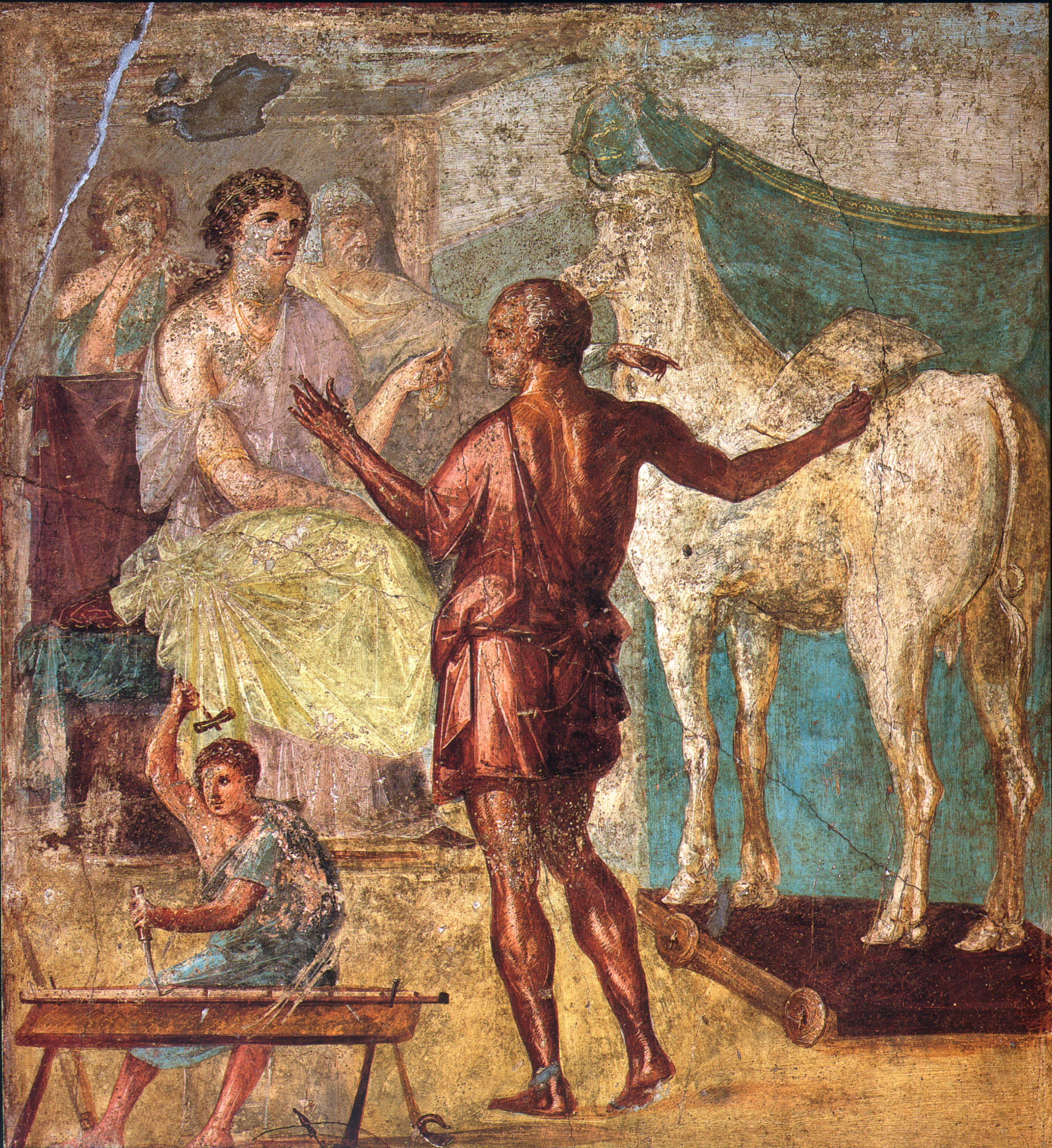
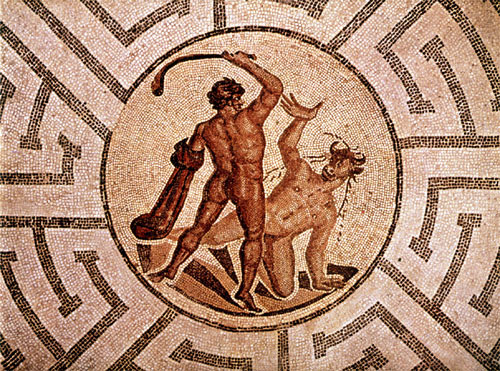
One of the most infamous supernatural entities in Greek mythology, the mighty Minotaur of Crete is a compelling creature of depth and pathos. Described as a brutal hulking human with the head of a bull, the horned hybrid was condemned to a solitary life in the labyrinth below King Minos' palace at Knossos according to ancient legend. The story goes that Poseidon decided to punish the Cretan king after Minos failed to sacrifice his beloved white bull in honour of the sea god and so struck his Pasiphaë with odd bestial desire. Falling in love with the bull and consequently making love to it (assisted by a bull disguise crafted by the legendary inventor Daedalus) she ended up pregnant and gave birth to a monstrous half-human, half-bull hybrid named Asterion. Wider society would come to know the creature as the Minotaur and his shamed royal stepfather imprisoned the ugly, violent being to the subterranean maze. Sacrificial victims paid as tribute by other city-states were sent down to the labyrinth for the vicious captive to devour until Theseus of Athens arrived intent on bringing its demise. With his cunning, encouragement from Minos' daughter Ariadne and a ball of thread to guide him back out of the maze, Theseus took his sword to the bull and cut its sad life short. An iconic creature in art across the ages, the poor Minotaur strikes me as one of the most tragic of all mythical beasts that deserves at least some love just for its distinctive appearance and tremendous lack of luck. Here's to the unfortunate Asterion: the mighty Minotaur of the labyrinth.

Wednesday, March 3, 2010

Day XCIII - Geryon


Three-bodied giant,
Visited by Heracles,
Hero claims cattle.


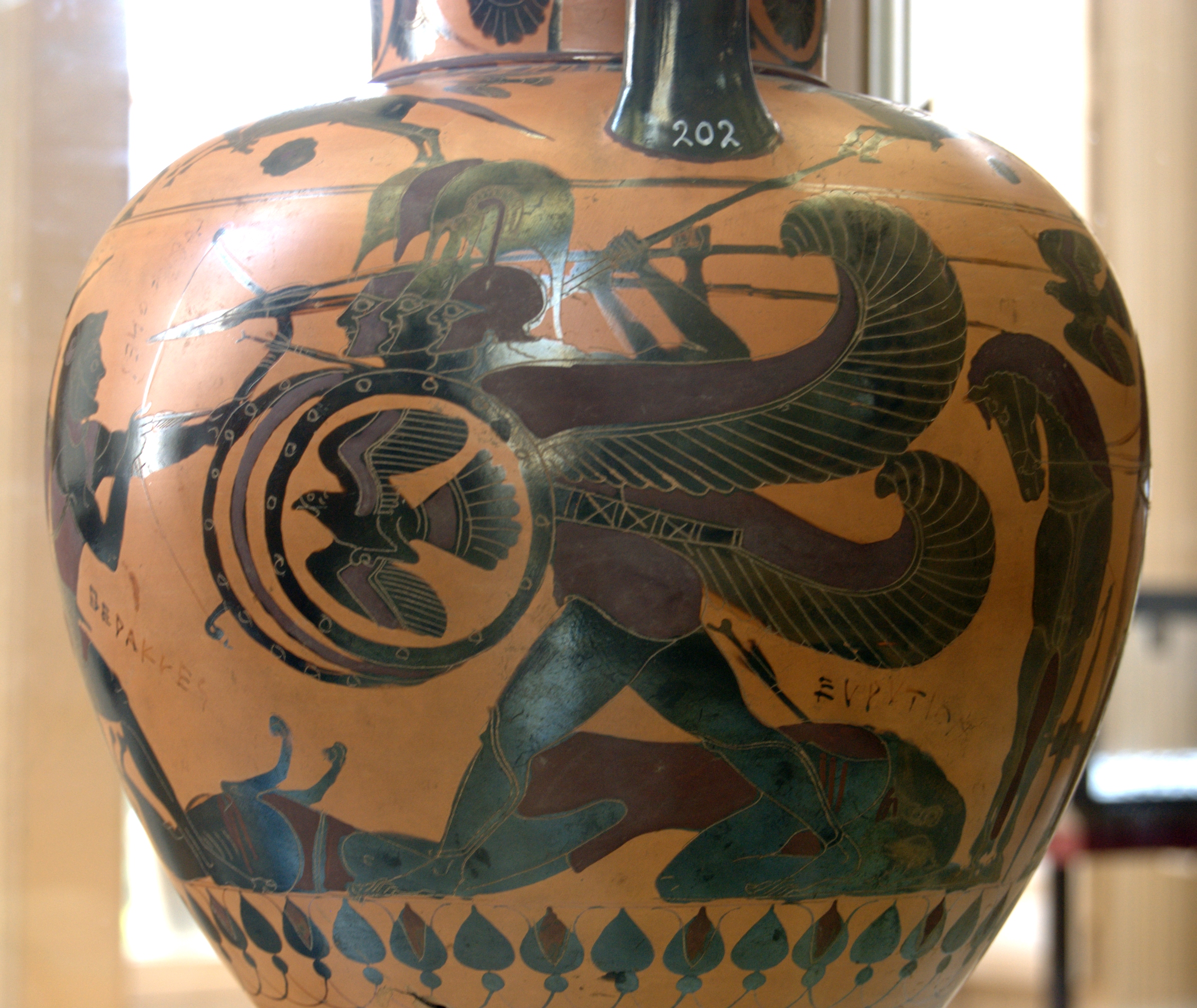
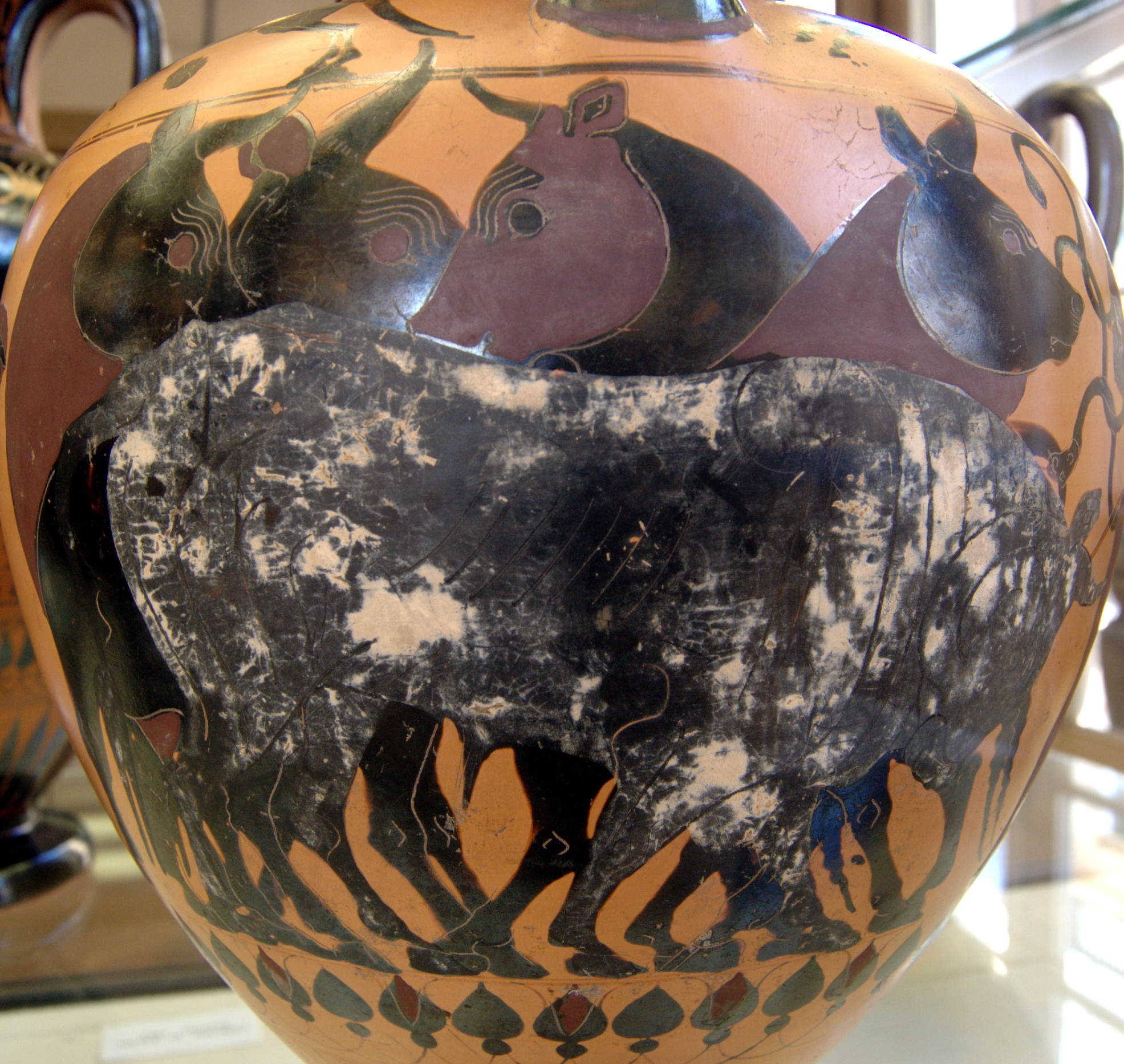
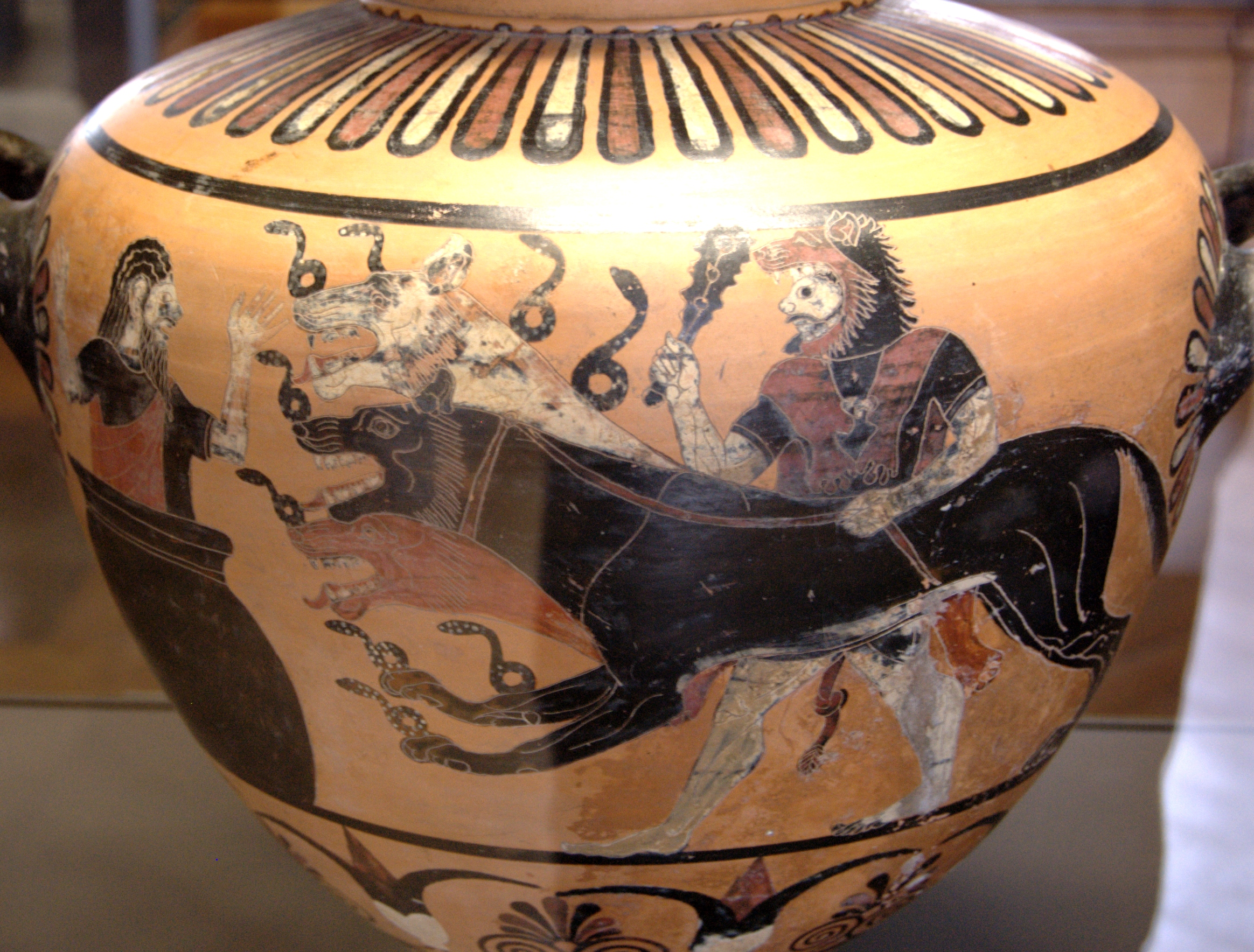
Another great figure from Greek mythology, Geryon is the three-bodied giant believed to live on the isle of Erytheia beyond the Hesperides to the west of the world's end (ancient Greek thought figured the edge of existence was whatever lay beyond the Mediterranean Sea). Reckoned to be a ferocious giant with brutal, warrior inclinations, the most outstanding thing about the figure is that he's seen as a 'three-in-one' beast. Geryon is described as being triple-bodied with three heads and torsos joined together which all ultimately adds up to something spectacularly terrifying. Depictions don't always agree on exact numbers of heads, legs and arms, however, and sometimes the giant is given wings. Despite all the ferocity, Geryon has a herd of magnificent red cattle that he cares for with the aid of Eurytion the human hersdman and Orthrus the two-headed watchdog (and brother of Cerberus). Heracles, despatched to claim the cattle, sails in a golden cup to the Hesperides and clubs the giant's companions to death before grappling with Geryon himself. The triple-titan meets his demise when the demigod knocks off one of his helmets and pierces the forehead with a hydra-venom-laced arrow. Legend then has it that Heracles brings the special bovine back to King Eurystheus having successfully completed task ten (after he gets sidetracked when Hera sends gadflies to bother the cattle and causes them to scatter across the continent. It takes the hero a year to gather them together again). It's a pretty sorry end for such a striking, imaginatively-inspiring beast. To the great giant cowherd of Greek mythology, I'd say a bit of empathy and awed respect for his outstanding anatomy is due.

Saturday, February 27, 2010

Day LXXXIX - Manticore


Tail of shooting spikes,
Lethal lion-hybrid strikes,
Brass tones of terror.


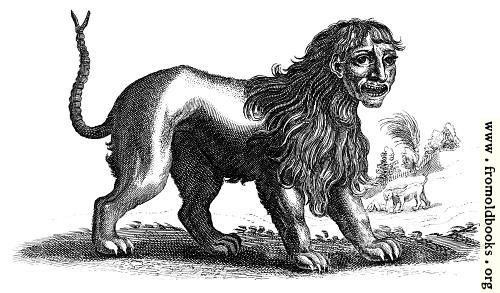
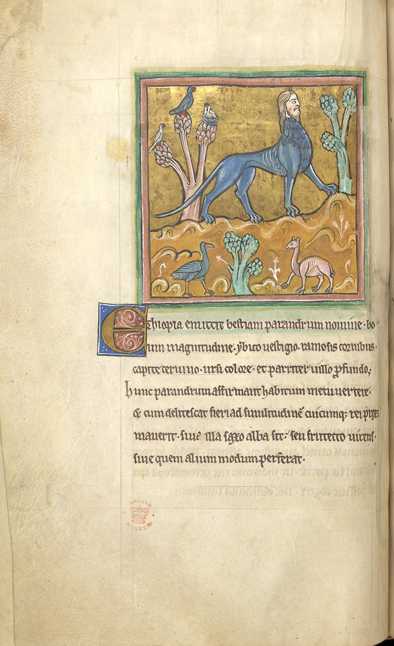
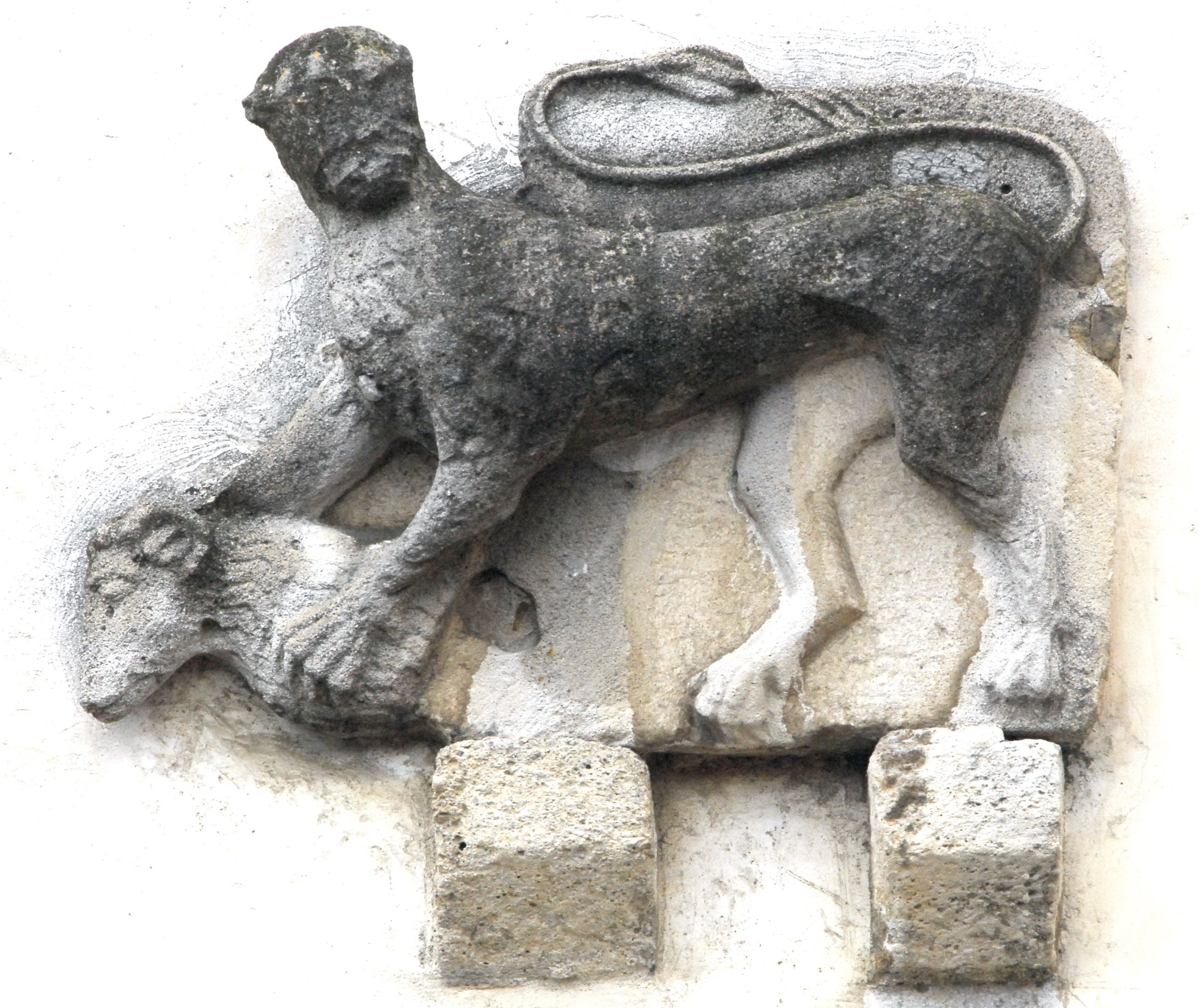
An incredible man-eating hybrid, the Manticore is a terrifying creature that has spread dread through a range of different mythical traditions. Like a masculine-version of the sphinx, the creature is commonly a composite of human head, a red lion body and a lethal tail of spiny poisonous spikes that it shoots to kill or paralyse its prey. The mythical beast - also understood to have a brilliant booming voice like a brass section - has its origins in ancient Persian legend and was believed to lurk in the far away lands of India. Tales of the Manticore spread to the leading intellectual arenas of Mediterranean antiquity and the creature consequently enjoyed a prominent resurgence in medieval European bestiaries. Despite its human traits and tuneful trumpet tones, the creature is a carnivorous horror desperate to rip flesh, sink its multiple rows of sharp teeth into meat and swallow victims whole. Flinging deadly arrows, the hybrid form of the Manticore is something to fear and, quite frankly, flee from without so much as a second thought.

Friday, February 19, 2010

Day LXXXI - Centaur


Savage hooves gallop,
Engaged in war with Lapiths,
Equestrian man.


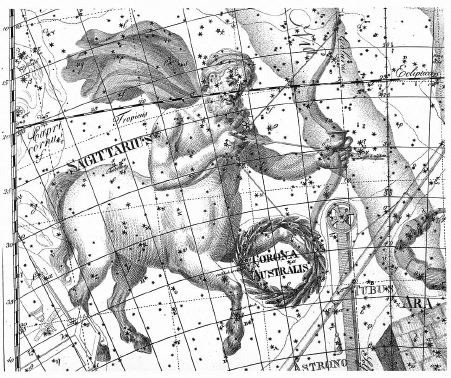
With the torso of a human being emerging out of the body of a horse, the Centaurs are supreme hybrid creatures of Greek mythology whose equestrian forms live long in cultural memory. Lusty, violent and easily influenced by wine, the creatures are generally characterised as a brutal and unruly race of beings with the exception of the wise Cheiron (master medicine expert and tutor to many a Greek hero who gave up immortality so he could become the Sagittarius constellation) and Pholus (friend of Heracles who accidentally kills himself with one of the legend's poison arrows). Out of the many myths in which the Centaurs make an appearance, the most significant episode is their clash with the Lapiths which comes when the horse-human hybrids violently gatecrash King Pirithous' wedding and attempt to abduct the female guests. With the help of Theseus, the Lapith people inflict huge losses on the Centaurs and scatter them across the lands in a battle which symbolises the triumph of civilisation over barbarism. Despite the defeat and condemnation as 'uncivilised', the presence of Centaurs in art across the ages - beyond their Greek origins - attests to the fact that these are awesome mythical entities that deserve our respect and appreciation. The half-man-half-horse is magnificent.

Saturday, February 13, 2010

Day LXXV - Chimera


Three mouths breathe fire,
Beast battles Bellerophon,
Hybrid monster slain.


Legendary composite creature of Greek mythology, the Chimera (or Chimaera) is said to be a feminine fire-breathing monster of many heads whose infamy is such that her name now refers to anything of many amalgamated parts or a 'wild fancy' in popular lexicon. Said to have three faces, whoever encounters the ominous Chimera comes up against a lion at the front, a goat in the middle and a snake at the tail-end, altogether making it a terrifying beast and another terrible offspring of Echidna and Typhon. It's the great Greek hero Bellerophon who travels to the perpetual fires of Lycia, Asia Minor to obliterate the monster: according to the myth he avoids the flaming breath of the Chimera by flying high on the back of the winged horse Pegasus. Crafty Bellerophon defeats the dread creature by sticking a block of lead on the point of his spear which he rams into the mouth (which mouth we're not sure) whereupon it melts under molten flame and suffocates the great Chimera. It's a tragic but fittingly gruesome finale for a monster that epitomises the ancient Greek idea of combining a number of amazing animals together into one awesome supernatural package. I salute this scary entity: the great goat-lion-serpent deserves much praise.

Sunday, February 7, 2010

Day LXIX - Satyr


Greek comic relief,
Well-endowed woodland figure,
Phallic hedonist.


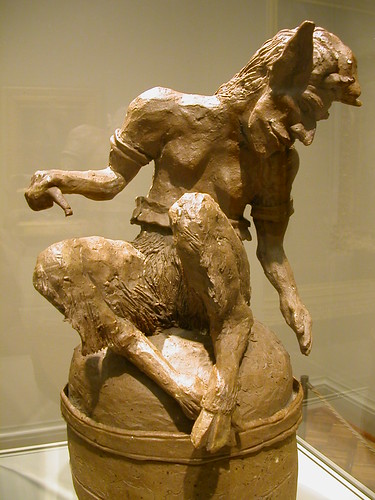
Great figures of fun from Greek mythology, Satyrs are sexually-active beings of the mountains and woodlands. Later legend conflates them with Roman fauns, but the original Satyr is generally understood to be a diminutive, well-built bearded folk with a horse's tail rather than the legs of a goat. The creature's most outstanding anatomical feature, however, is its huge ever-erect penis and - as befits such a well-endowed character - Satyrs are renowned for their sex-drive and love of chasing nymphs around the countryside. Associated with the god Dionysus, they are similarly said to enjoy wine, music, dancing and other assorted forms of enthusiastic revelry, thus they find themselves repeatedly represented in art. Aside from flashing their phalluses all over ancient pottery and artefacts, the wild woodland beings were a significant part of classical drama providing comedy amidst all the Greek tragedy with their obscene antics and irreverent asides. Able to raise a smile at any time, the Satyrs are magnificent supernatural specimens who should be hailed for their good-humour and hedonistic spirit.

Saturday, January 30, 2010

Day LXI - Hippocamp


Astounding seahorse,
Noble steed of Poseidon,
Rides on ocean spray.


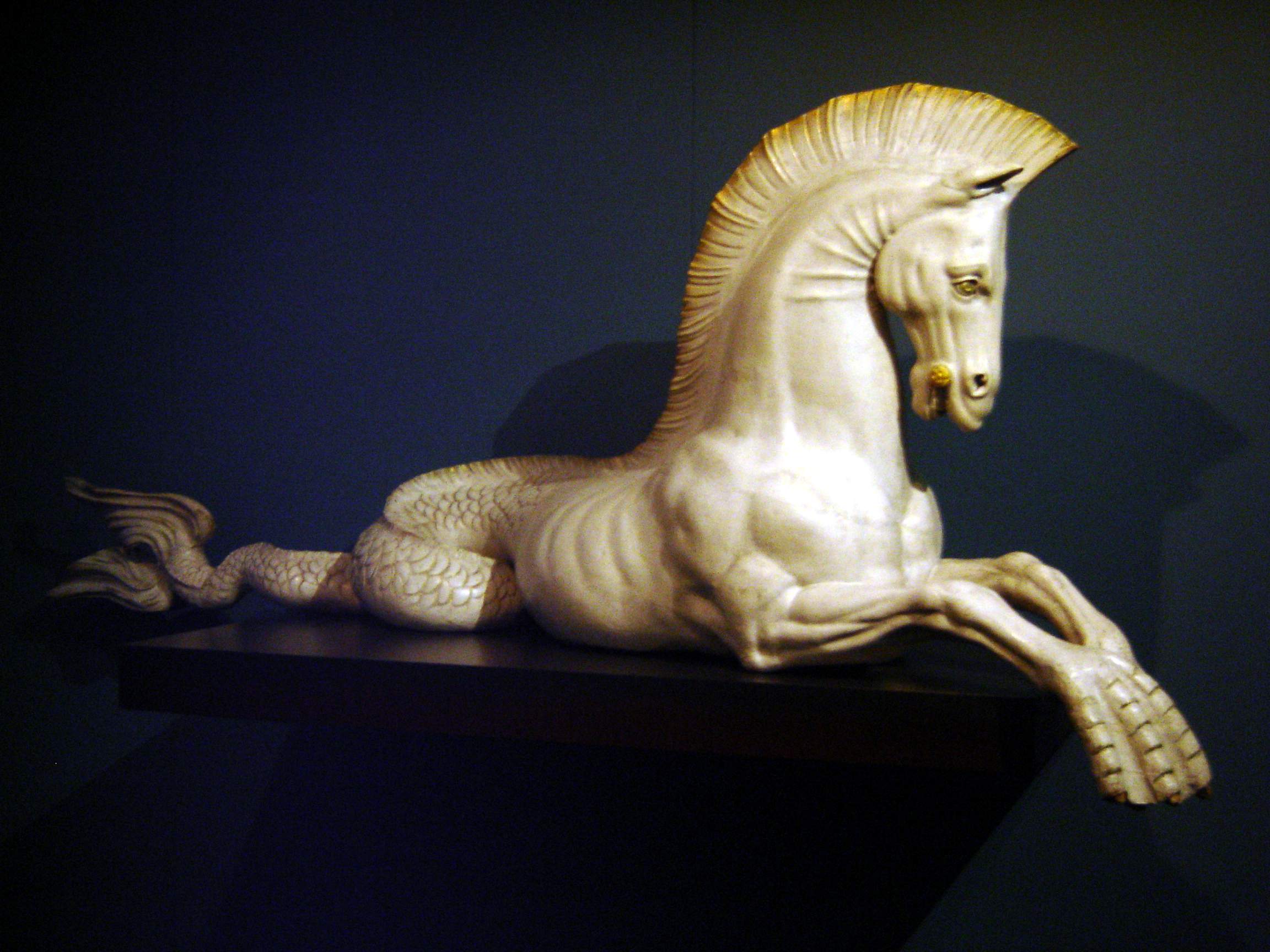
Supernatural seahorse supreme, the Hippocamp (or Hippocampus) is the sea god Poseidon's majestic stead in Greek mythology. With equestrian front parts and fishy tail and fins below, legend has the aquatic horse drawing Poseidon's sea chariot across the waves or frolicking in the foam with his Olympian master. The fantastic creature makes many prominent appearances in the archaeological evidence of the ancient Mediterranean: the divine fish horse adorned the tile mosaics of many Roman baths and Hippocampi can be found as spectacular fountain sculptures (such as Roma's Trevi Fountain), Etruscan pottery decorations and a in whole array of other Classical artworks. The Hippocamp is marvellous so all hail to the awe-inspiring stallion whose bronze hooves pound the waves and pull Neptune across his watery domain.

Tuesday, January 19, 2010

Day L - Gorgon


Serpentine tresses,
Stone-cold petrifying stare,
Sisters induce dread.


Undoubtedly amongst the greatest monsters of Greek mythology, the three Gorgon sisters (Stheno, Euryale and Medusa) go down in legend as loathsome snake-haired women whose eyes turn unfortunate others to stone. Described as having fanged teeth, tusks, bronze hands and golden wings, the gruesome beasts' reptile-features are infamous and have appeared in pop culture all over the place (from schlocky Hammer horror, Harryhausen stop-motion film and heavy metal music, for a start). Functioning as the fearsome nemeses of Perseus in myth, the hero enlists the help of the Olympian gods in order to achieve his objective of bringing back a Gorgon head (they provide Hermes' winged sandals, Hades' Cap of Darkness conferring invisibility, an ultra-sharp sickle and a shiny shield). Stheno and Euryale are immortal, but Medusa is not: ergo, Perseus targets her, only looks at her reflection in his shield as he approaches then decapitates her with the sickle. Fleeing the distraught sisters (who can't apprehend him as he's wearing the Cap of Darkness), the hero proceeds to use the snake-adorned head to turn various other enemies to stone. From the severed neck of Medusa springs the winged horse Pegasus (Medusa was pregnant by Poseidon) which gives even more reason to regard the reptilians as amongst the most brilliant and imaginative of mythical beasts. Back in antiquity the Gorgon was employed as an apotropaic icon on amulets and architecture to protect against evil, but their grim presence pervades the ages. Gloriously ghastly, all hail to the hybrid horrors with the hissing hairdos.

Monday, January 11, 2010

Day XLII - Graiai


Three wretched sisters,
Crones share single eye and tooth,
Snatched by Perseus.


Supernaturally old, grey and grim from the day of their birth, the Graiai (or Graeae) are the dreaded three ugly sisters of Greek mythology who make their appearance in the legend of Perseus. Toothless and blind, the Graiai (named Deino, Enyo and Pemphredo - 'Dread', 'Horror' and 'Alarm' respectively) share a single eyeball and a single tooth that they pass between themselves. In the myth, Perseus passes by the cave of the crones and forces them to reveal the whereabouts of Medusa and the Gorgons by snatching the eye and the tooth, holding the helpless old hags to ransom. The three have no choice but to give up their sister Gorgons (it's a pretty ugly family. When beastly primordial sea gods mate, expect a spawn of monstrous offspring) thus suffering more misery and woe. Forever old, decrepit and disabled, the Graiai are a tragic trio that - even though they are the original, archetypal three witches - deserve some sympathy. At least Perseus gave them their eye and tooth back...

Saturday, January 2, 2010

Day XXXIII - Cerberus

Three-headed canine,
Guard of Hades' Underworld,
Escape unlikely.


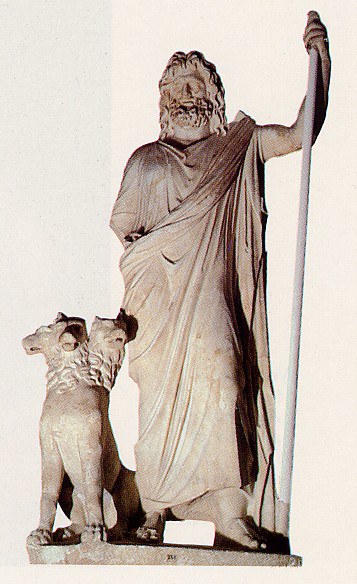
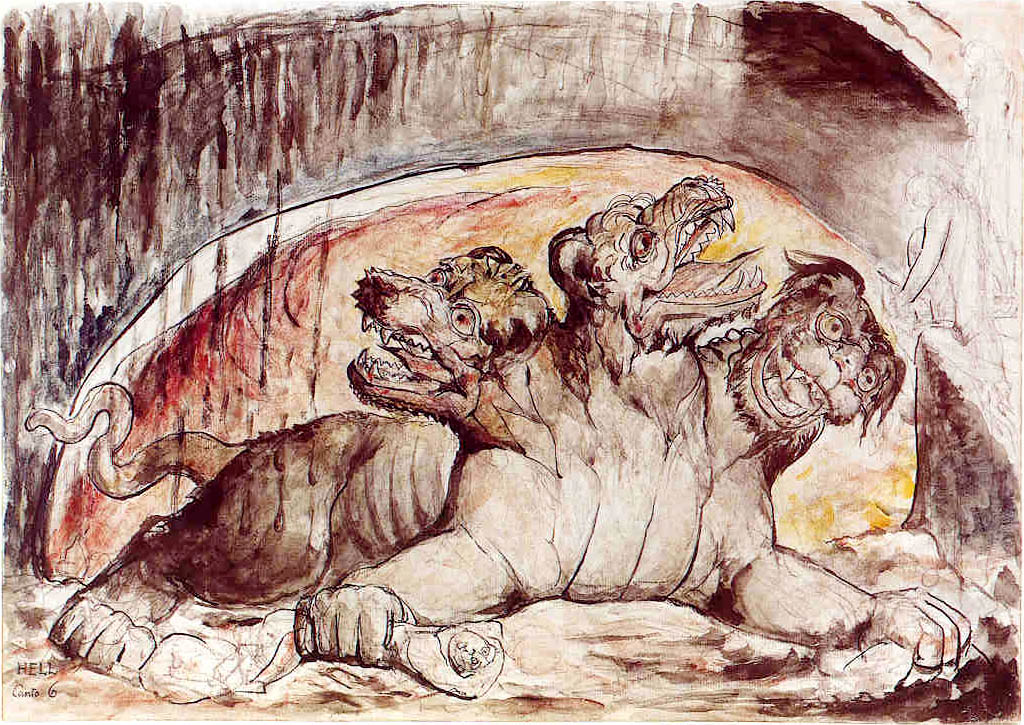
The famous multi-headed dog of Greek mythology, Cerberus (or Kerberos in the original Greek) is the pet of Hades and fearsome fanged guardian of the Underworld who prevents the dead who've crossed the River Styx from ever leaving. Descriptions of the monster vary depending on the source: sometimes cited as having two heads and sometimes as many as 50, though three is the most common, magic number. Cerberus is also said to have a tail of snakes and aside from being an iconic ancient Greek beastie in art through the ages, the big dog has the honour of being the last of Heracles' twelve labours. On the condition that he can overcome the colossal canine without weapons (which he does) Hades allows the hero to borrow Cerberus to show to taskmaster King Eurystheus who subsequently hides in a jar and accepts that Heracles has achieved the obligation. Dante's Inferno has the hound watching over the glutinous in the Third Circle of Hell and I'd say -
because three heads are better than one - Cerberus stands proud as the greatest guard dog ever.

Thursday, December 31, 2009

Day XXXI - Werewolf

Light of the full moon,
Furry metamorphosis,
Lycanthrope rampage.


With its claws covering a whole variety of disparate cultural traditions the world over, the werewolf is the überpopular shapeshifter that powers its way to the top of the supernatural beastie pile, ravaging the rest with its sharp teeth and superhuman strength. All over assorted artforms and popular culture (my own personal favourite werewolf flick probably being Universal's classic The Wolf Man) the lycanthrope myth alters according to time period, place and tradition but is always about the transformation from human to furry, primal, bloodthirsty wolf. With the Greek myth of Lycaon (cruel king serves Zeus a slaughtered child for dinner and gets turned into a wolf as punishment) and the prevalence of werewolves across the continent's communities, the creature of the popular imagination is pretty much European. Regardless of how someone comes to be a werewolf (getting scratched, Satanic ritual, sleeping under a full moon or wearing a wolfskin), whether the metamorphosis is voluntary or what the cure is (wolfsbane, silver bullets or holy water) werewolves are awesome and function as fantastic empathetic figures that embody all the pain of male adolescence and the primal urge to, you know, be bloody savage. Howl at the Moon!

Wednesday, December 30, 2009

Day XXX - Harpy


Snatching winged monster,
Terrifying female form,
Torments Phineus.


Foul flying beasts with the heads and breasts of a human female, the Harpies are the horrible bird-hybrids of Greek mythology whose name still resonates today as an an insult thrown at irksome women. The ugly avians make their appearance in the tragic tale of the Thracian king Phineus who had the gift of prophecy but was blinded by the Olympian gods for revealing too much. As further punishment, the poor man was condemned to suffer at the talons of the Harpies on an island with a lavish buffet he'd never get to enjoy. At every attempt to eat his winged tormenters swooped down either snatched the food from his hands or defecated all over it. As the story goes, the long-suffering seer only found some relief upon the arrival of Jason and his Argonauts (passing by on the quest for the Golden Fleece) who helped scatter and did some deals with the right Gods to get the flying menace to leave off. The episode was reimagined in glorious Harryhausen stop-motion for the Jason and the Argonauts movie, and altogether the Harpies go down in history as some of the most intriguing beasties of Greek mythology. The Harpies torture the suicides of Dante's Inferno, exist in outstanding artefacts of the ancient age and will forever come flapping back into consciousness every time an irritating old woman nags you or flings excrement on your dinner.

Friday, December 25, 2009

Day XXV - Faun


Horny hedonist,
Panpipes and wine aplenty,
Hailing to Bacchus.


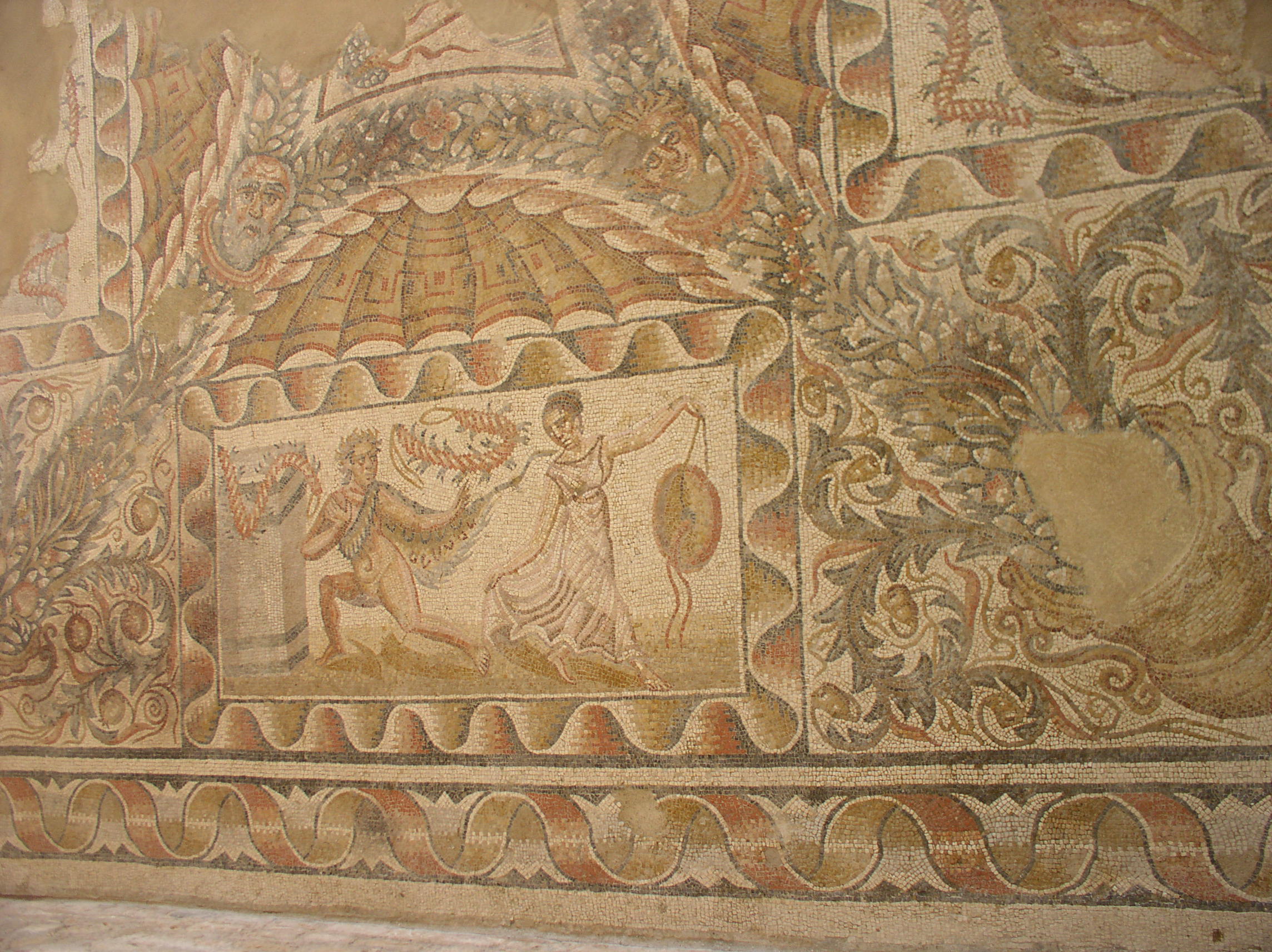
Romping through the woods in a wild frenzy, Fauns are the fun half-goat-half-human creatures of Roman mythology associated with drinking, dancing, music and all other assorted forms of free merriment. With the horns and hind-quarters of a goat, the Fauns are the panpipe-blowing followers of Bacchus (the androgynous good-time god of wine, theatre and mad carefree abandon) and are pretty appropriate figures for December 25th: also the Roman winter solstice feast day of Brumalia dedicated to the free-loving deity. Inspiring art through the ages and making appearances all over the place - from Narnia books to Guillermo del Toro movies - Fauns are associated with outdoor orgies, sexual liberation and, in general, all-out ecstasy and excess. The pre-eminent party animals are righteous mythical creatures for a Merry Winter Celebration Day, so to the randy goat revellers of the forest: cheers!

Tuesday, December 22, 2009

Day XXII - Sphinx

Composite creature,
Poses perplexing riddle,
Death to the clueless.


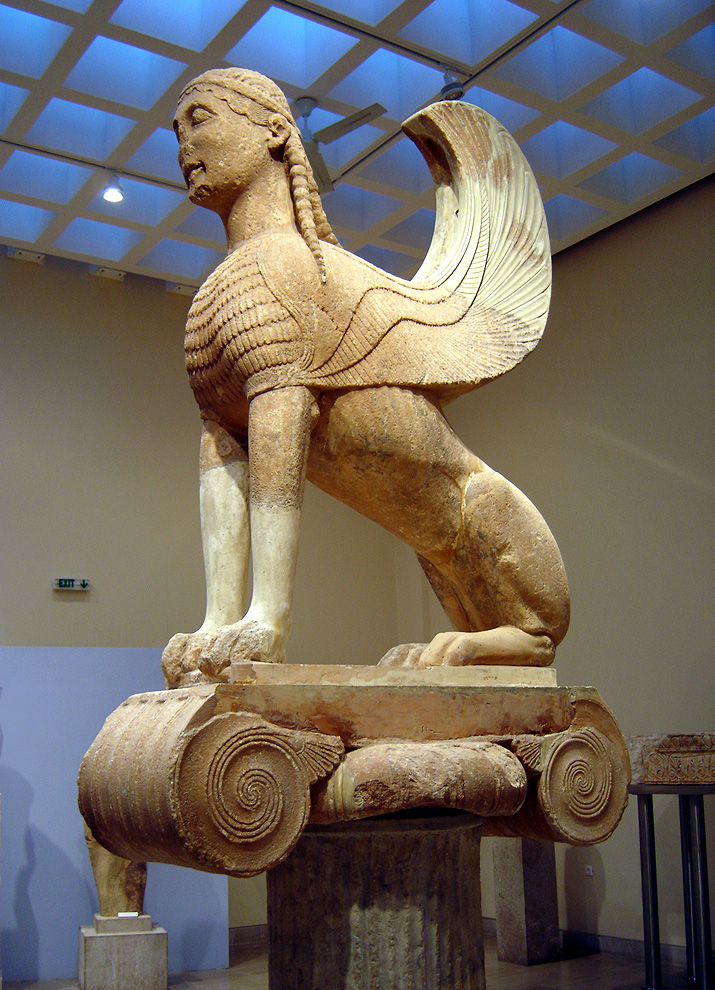
A hybrid oddity from ancient Egyptian and Greek mythology, the Sphinx is a tricksy figure most often represented in stone form, crafted to guard temples. Usually (though not exclusively) described as having the head and breasts of a human woman, the wings of an eagle, the body of a lion and a snakish tail, the Sphinx enjoys asking passers-by riddles and killing them when they can't answer. Whether the Sphinx strangles or devours the simple soul who can't solve whatever conundrum is cast their way depends on the story, but in the tragic legend of Oedipus it's the beast herself who ends up the loser. Oedipus solved the riddle, saved the city of Thebes from the monster's brainscrambling and barbarism and consequently the Sphinx is reckoned to have either eaten herself or thrown herself off a cliff. It's not all bad though, as the composite creature lasts through the ags as a bizarre cross-cultural symbol powerfully recreated in statue-form (most iconically to guard the Pyramids of Giza); Oedipus only ended up with an incestuous psychological complex named after him.

Tuesday, December 15, 2009

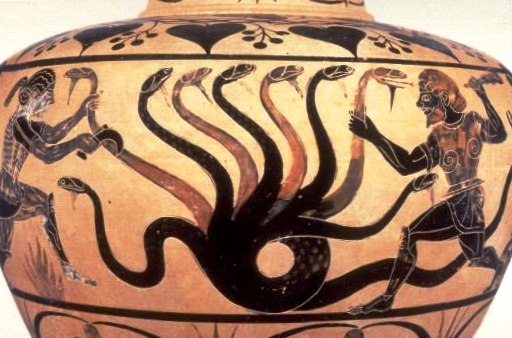
Day XV - Hydra

Reptilian foe,
Head count keeps on increasing,
New necks grow afresh.


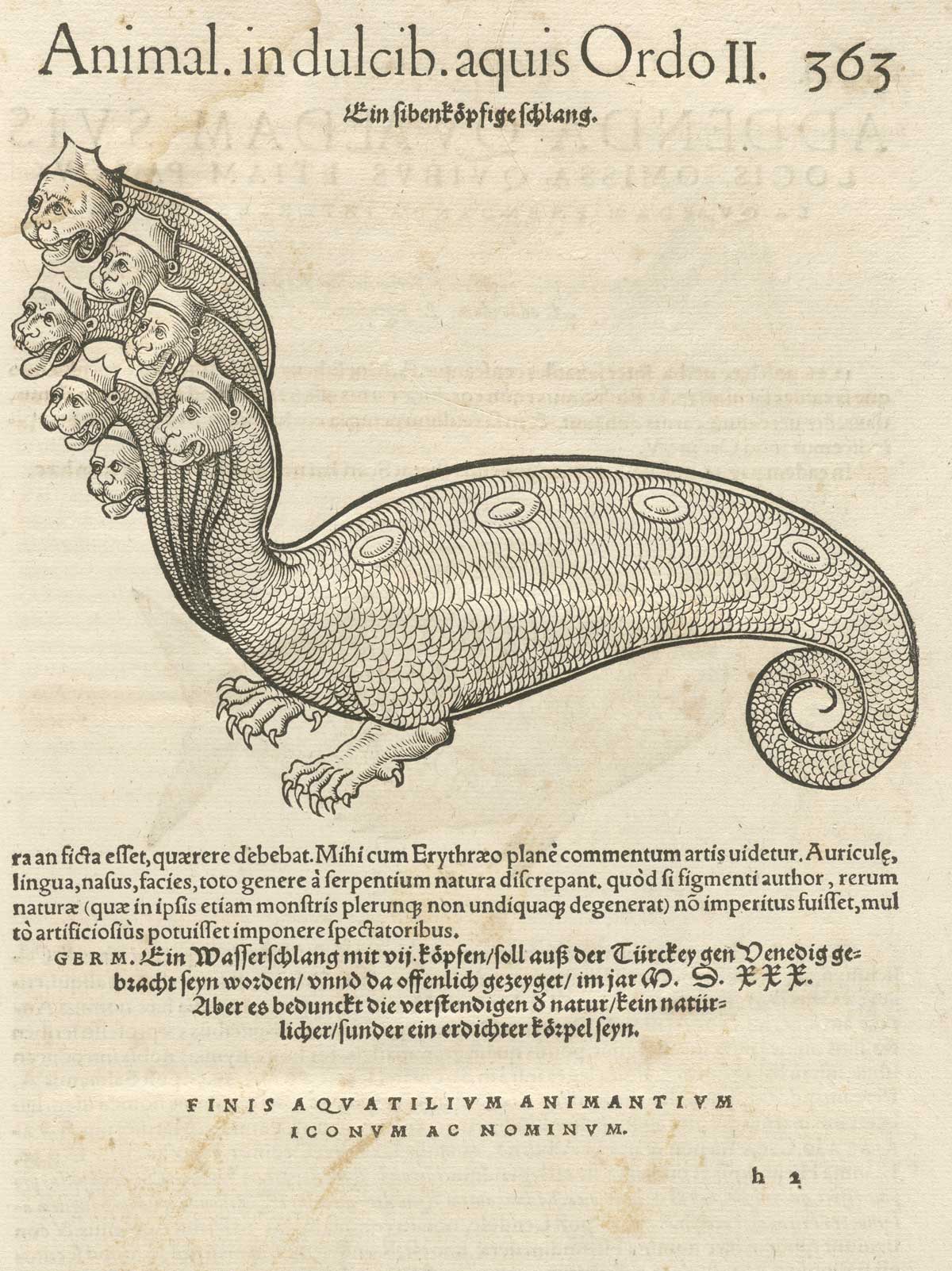
An astounding monster of ever-multiplying evil, the Hydra is the Greek mythological beastie that offers brilliant entertainment value in that it can carry on spawning new heads. A giant water-based serpentine horror of the Underworld with poisonous breath and venomous blood, the many-headed Hydra has the handy ability to grow two fresh heads in place of every one decapitated. As his second task of the twelve, Heracles was sent to grapple with the Hydra of Lerna but could only effectively kill it with help from his nephew Iolaus, who scorched the neck stumps to prevent regrowth every time a Hydra skull was whacked away by the strongman's club. As befits a creature that keeps coming back for more, the Hydra is an icon for the ages represented numerous times in art and pottery, also cinematically appearing in Disney-form and in Harryhausen stop-motion form in Jason and the Argonauts. Hail Hydra!

Friday, December 11, 2009

Day XI - Cyclops


Man-eating giant,
Ocular disadvantage,
Odysseus wins.


A powerful primordial race of one-eyed giants, the Cyclopes are - depending on tradition - either gifted great masons who forged Zeus' thunderbolts, simple shepherds or brutal beasts with a taste for man-flesh. The most famous Cyclops is Polyphemos from the Odyssey who trapped the hero and a bunch of his companions in his cave and started eating them up one by one. Cunning Odysseus, however, conspires to get the big'un drunk and rams a burning stake into the Cyclops' single eye. Odysseus has also convinced the brute that he's called "Nobody", so that when blinded Polyphemos howls out in agony and causes the other Cyclopes to ask "who has hurt you?" his pained replies of "Nobody" receive only ridicule; Odysseus and the remaining survivors escape in the meantime disguised as sheep. Such is the sorrow of the mono-browed monster, but it's not all bad for the lovably humble hulk: Ray Harryhausen's Cyclops from The Seventh Voyage of Sinbad has gone down in stop-motion movie legend and the lone eyeball icon even inspired a form of architecture favoured by the ancient Mycenaeans and H.P. Lovecraft stories.

Friday, December 4, 2009

Day IV - Stymphalian Bird

Heracles scatters,
The avian bronze nuisance,
Labour six complete.


The Stymphalian Birds were large flying creatures with beaks of bronze and metal-tipped feathers that could they could fire at enemies. They are also said to have toxic dung, may have been man-eaters depending on who you believe and the myth goes that they irritated the locals around Lake Stymphalia on the Peloponnese peninsula following a mass migration. Heracles was summoned, for his sixth labour out of the twelve, got rid of them by scaring them out of the trees with the noise of a bronze rattle (probably shooting them down with bow and arrow before the winged ones had chance to launch their lethal feathers at him). This isn't really fair seeing as the Stymphalian may not actully have been vicious beasties but actually harmless refugees who only came to the woods around Stymphalia because they'd fled from some wolves. It's also sad that whereas Heracles is hailed as a legendary cultural hero, the closest we get to a cultural depiction of the metallic avians is probably the irritating mecha-owl Bubo in Clash of the Titans. The day will come for the bronze ones, and retribution will arrive on beating metal wings...