Wednesday, March 10, 2010

Day C - Oni


Japanese ogre,
Kanabō-swinging demon,
Brute strong beyond strong.


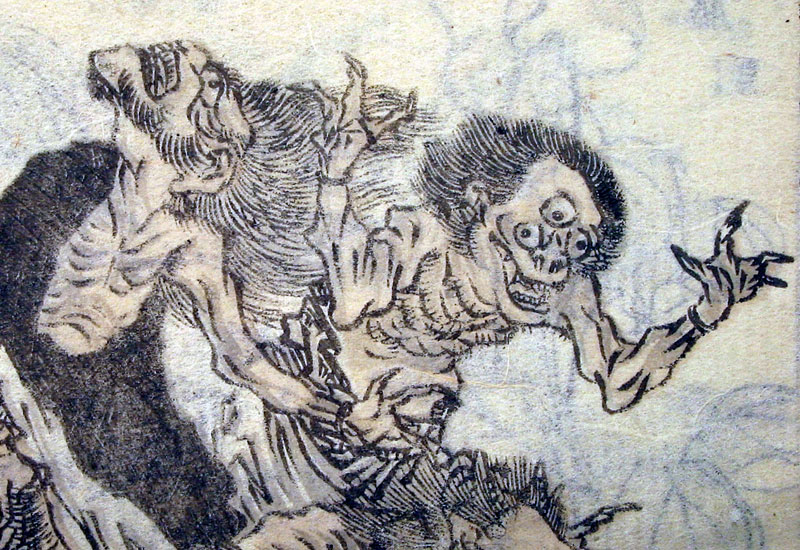
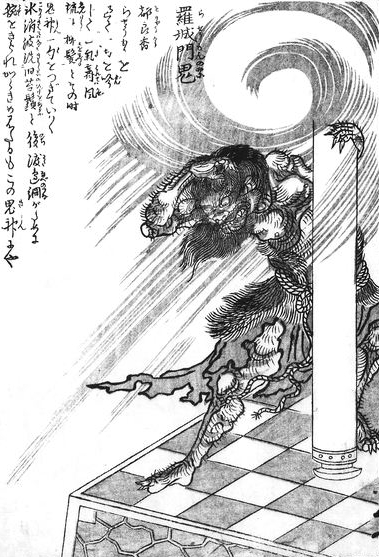
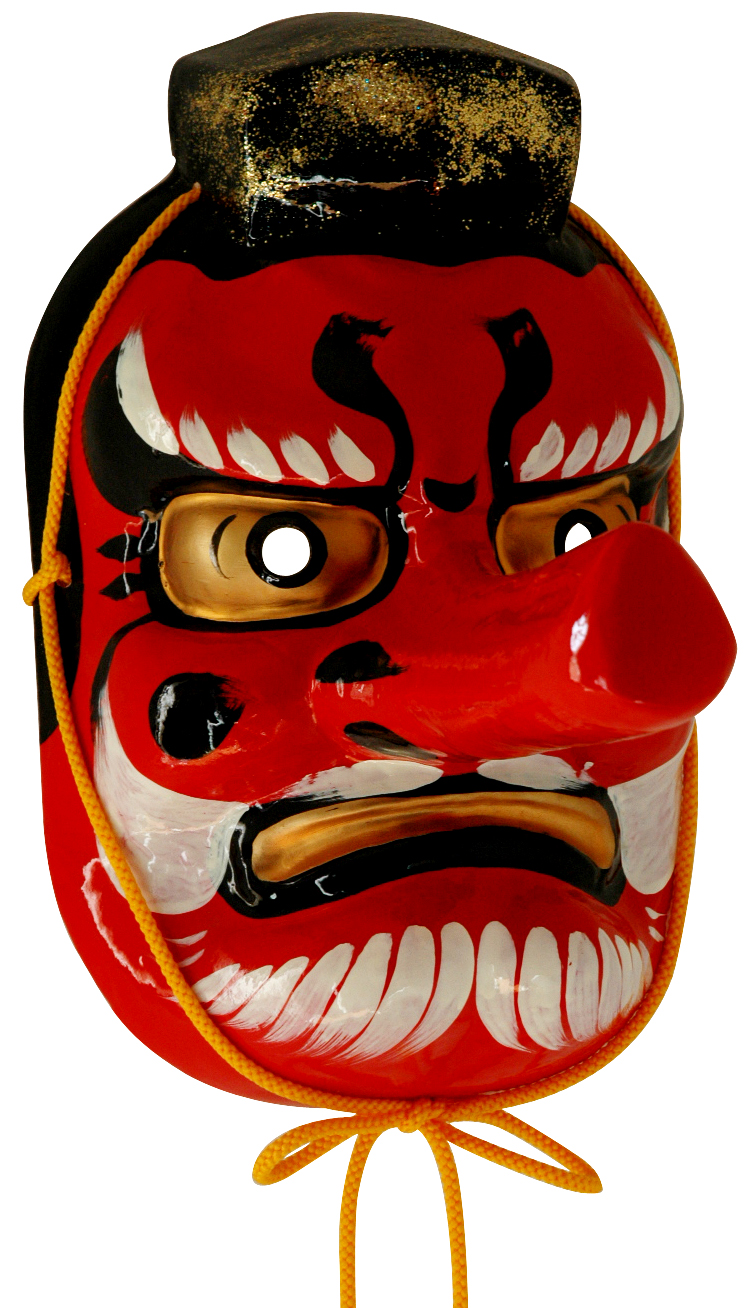
The captivating ogre or troll creature of Japan, Oni refers to a wide range of demonic humanoids in the region's cultural legend. Monstrous beings of a variety of types and individual odd traits (see the demon hag-woman Onibaba, for example) Oni are most often depicted as having huge fangs, a pair of horns and red or blue skin. A destructive and dangerous bunch, the demons typically wear a tiger-skin loin cloth and wield a distinctive iron club (the kanabō) to emphasise their might and ferocious nature. Said to torment sinners in Hell, the Oni's reputation for fearsome strength is such that its image is used to ward off bad luck and malign spirits. Nasty but lovable, nevertheless, the mythical Far Eastern entity with the lethal iron weapon has permeated pop culture and appears all over art through the ages. The Oni has even made its mark on the Japanese language: idioms like 'Oni with an iron club' ("oni-ni-kanabō"), for instance, refer to invincibility or something that is 'strong beyond strong'. A perilous demonic powerhouse swinging an impressive iron club: kudos to all the Oni of Japan. By demons, be driven...

And that's one hundred mythical creatures, one hundred screwy haiku verses and one hundred silly supernatural sketches. Whoa. It's been beautifully beastly. To the majestic mythical entities of the supernatural realms: I salute you!

Tuesday, March 9, 2010

Day XCIX - Sha


Egyptian canid,
Square-eared symbol of Set,
Tail like a fork.


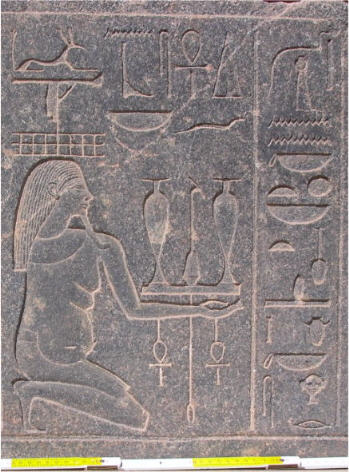
Understood to be a wild dog or jackal-like creature, the Sha is an auspicious entity of ancient Egyptian mythology associated with Set (god of darkness, chaos and the desert). Calling the North African Saharan home, the Sha is said to be black or red and has a slender body like a greyhound, a pair of perpetually stiff rectangular ears and a firm tail that's forked at the end. As a divine representation of Set's power, the creature can be found in hieroglyphs and archaeological remains lasting from antiquity and was adopted as an icon of several emperors and cults of the desert god. Sadly, in periods when Set was unpopular the Sha's standing likewise suffers, so depictions of the angular dog dies cease after the Third Intermediate Period. Linked with stories of the mysterious Salawa ("scary wolf") dog-beast that allegedly stalks the Egyptian desert, the wonderfully-named Sha is intriguing as a legendary animal purely for its idiosyncratic ever-erect ears and triton tail. For those features alone, the ancient Egyptian desert dog of divine significance deserves some veneration.

Monday, March 8, 2010

Day XCVIII - Minotaur


Tragic Cretan bull,
Labyrinth of King Minos,
Falls to Theseus.


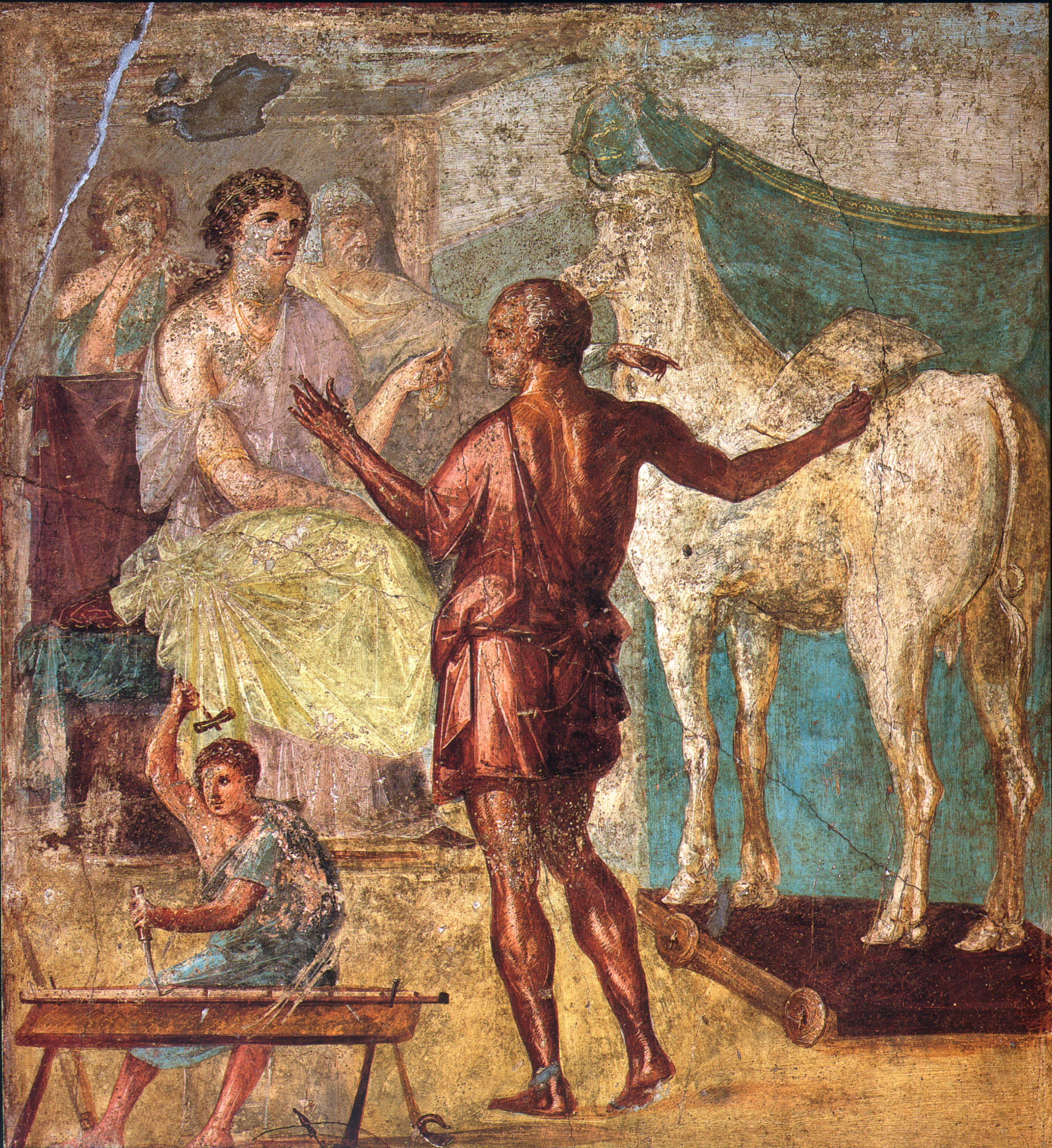
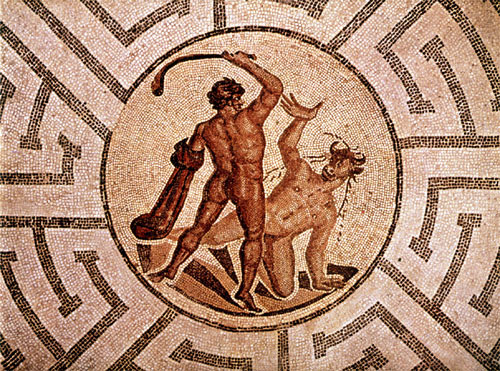
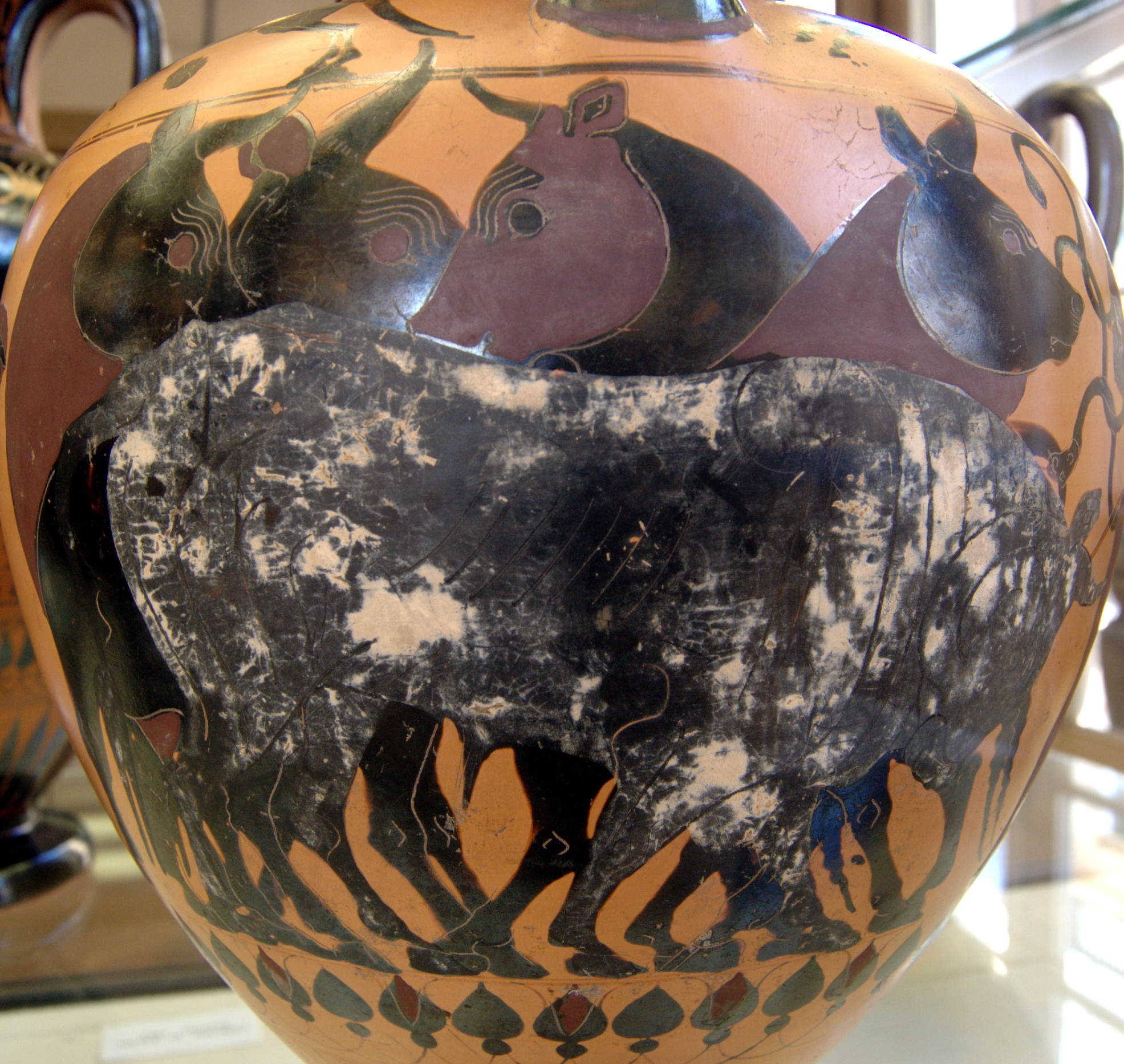
One of the most infamous supernatural entities in Greek mythology, the mighty Minotaur of Crete is a compelling creature of depth and pathos. Described as a brutal hulking human with the head of a bull, the horned hybrid was condemned to a solitary life in the labyrinth below King Minos' palace at Knossos according to ancient legend. The story goes that Poseidon decided to punish the Cretan king after Minos failed to sacrifice his beloved white bull in honour of the sea god and so struck his Pasiphaë with odd bestial desire. Falling in love with the bull and consequently making love to it (assisted by a bull disguise crafted by the legendary inventor Daedalus) she ended up pregnant and gave birth to a monstrous half-human, half-bull hybrid named Asterion. Wider society would come to know the creature as the Minotaur and his shamed royal stepfather imprisoned the ugly, violent being to the subterranean maze. Sacrificial victims paid as tribute by other city-states were sent down to the labyrinth for the vicious captive to devour until Theseus of Athens arrived intent on bringing its demise. With his cunning, encouragement from Minos' daughter Ariadne and a ball of thread to guide him back out of the maze, Theseus took his sword to the bull and cut its sad life short. An iconic creature in art across the ages, the poor Minotaur strikes me as one of the most tragic of all mythical beasts that deserves at least some love just for its distinctive appearance and tremendous lack of luck. Here's to the unfortunate Asterion: the mighty Minotaur of the labyrinth.

Sunday, March 7, 2010

Day XCVII - Wyvern


Aggressive icon,
Medieval winged evil,
Dreadful Dragonet.


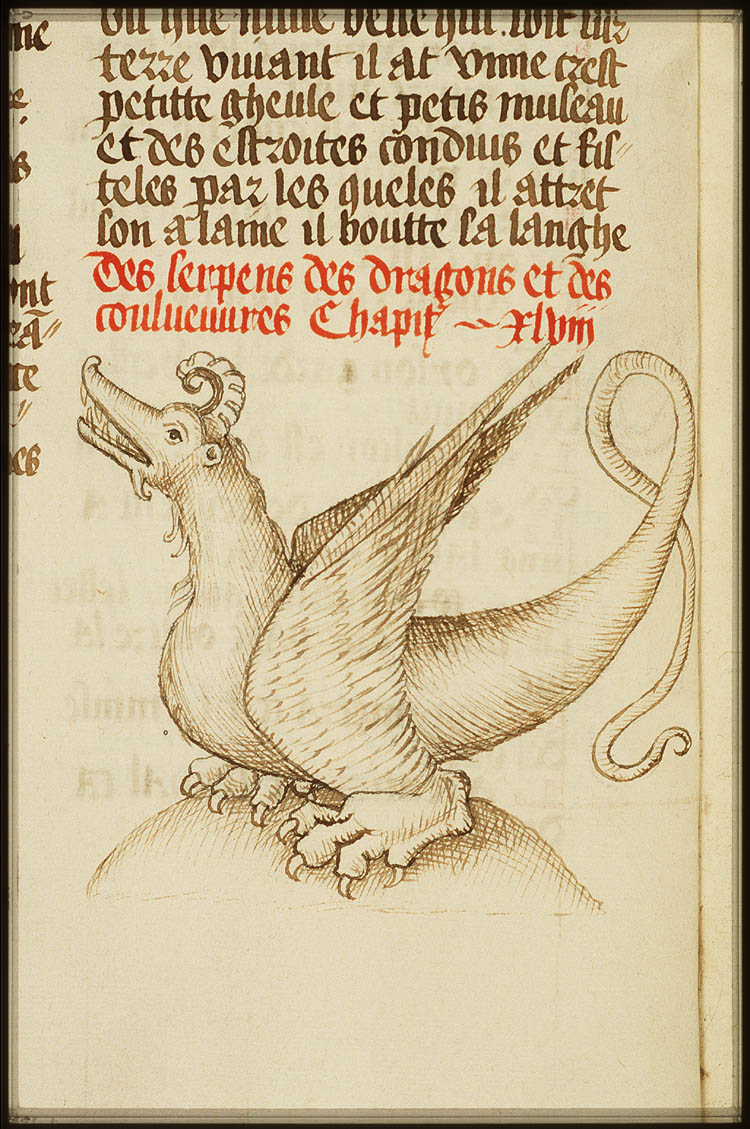
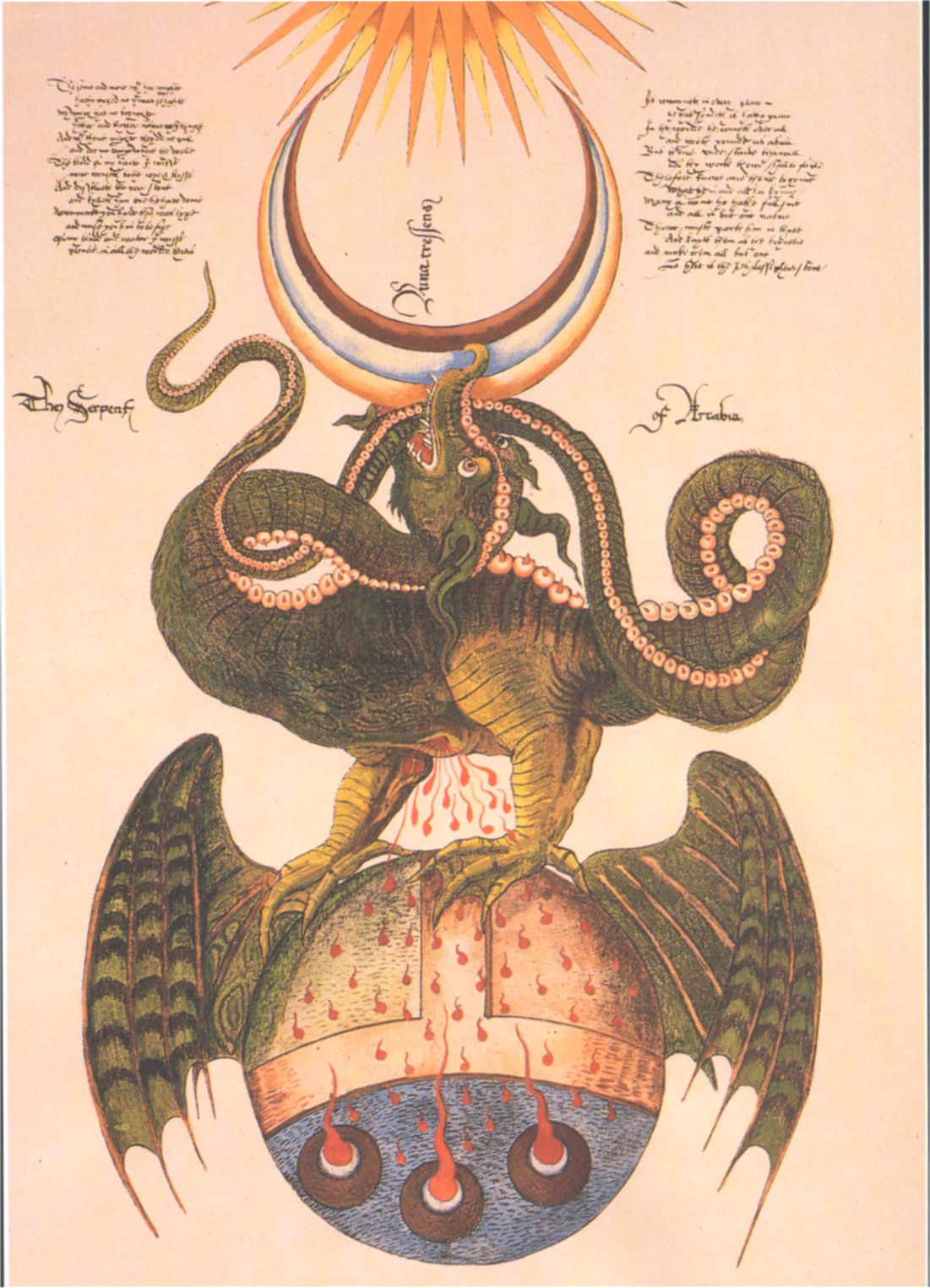
A distinct creature amongst the dragons of European legendary tradition, the Wyvern is a reptilian monster sometimes referred to as a 'Dragonet' due to the sense that they look like adolescent dragons. Identified by the beakish jaw, a pair of expansive wings and the fact that they only have a set of hind-legs (their wings act as forelimbs) Wyverns are cited as being very individual entities and are prominent in medieval bestiaries, heraldry and iconography. Said to be smaller but more actively aggressive than the average dragon, Wyverns can also be picked out thanks to their sharp, pointed tail (possibly poisonous) and their angular heads. Considered to inhabit cavern lairs just like conventional dragons, another distinctive feature of Wyvern nature is their lack of acute intelligence and thus it's believed that their treasure hoards are most likely to be filled with worthless junk rather than real valuables. Popular in the mythology of medieval Europe, the soaring serpentines were looked to as a symbol of strengthalchemical dabbling or as allegorical icons of Satan and the spread of pestilence. Altogether, Wyverns fly high as fantastic, enthralling mythical beings.

Saturday, March 6, 2010

Day XCVI - Harionago


She of Shikoku,
Itching to unleash barbed braids,
Hook-hair horror.


Another scary, hairy female figure from Japanese folklore, Harionago literally translates as "barbed woman" and terrifies the island of Shikoku. Legend has it that the beautiful lady (also known as Harionna) wanders the roads of the Ehime prefecture region actively looking for victims, preferably younger men. The Harionago's outstanding attribute is her sharp barbed hook hair which she lets down and unleashes on the victims she encounters. The ghoulish terror allegedly laughs at those she comes across and should they laugh back, she sets her sentient hair on them and ensnares them for their audacity. She's an excellent and imaginative Japanese folklore entity, and so I'd say we should salute the Harionago, her striking looks and lethal locks.

Friday, March 5, 2010

Day XCV - Wakwak


Noises in the night,
Terrible ripping talons,
Tears out human hearts.


A winged terror from Filipino folklore, the Wakwak is a vampiric bird-bat type beast that poses a great threat to its human prey. Named after the flapping sound it makes as it flies through the night, it is said that the louder it is, the further it is away. That, I suppose, ultimately means that you're safe if you can hear it (and in tremendous danger if you can't) thus, if you don't hear it you're in tremendous danger). If that wasn't disturbing enough, the Wakwak is reckoned to have exceptionally sharp wings and vicious long talons or claws that it uses to slash and mutilate those it attacks. The Manananggal is a similar bat-being in the mythology of the Philippines, distinguished by its ability to split its body in half (which the Wakwak cannot do). The dreadful night monster is associated with unklu (Filipino vampires) and witches and altogether comes across as an excellent vampire-entity with all its heart-devouring viciousness and confusing sound effects trickery.

Thursday, March 4, 2010

Day XCIV - Behemoth


Immense animal,
Great grazing beast of scripture,
Largest in the land.


So humongous that its name now generically refers to anything very large and powerful, the Behemoth is the land-based equivalent of the Leviathan. Just like the very big fish, the Behemoth makes his mark on the Book of Job and symbolically stands as the largest animal of the earth in Judeo-Christian scripture. Beyond the consensus on its colossal size and tremendous strength, descriptions of the beast's appearance vary with some identifying the Behemoth as an oxen-type creature, some a warthog-like-being or others more along the lines of a hippopotamus or elephant. Envisaged as a insurmountable grazing herbivore that can only be killed by God, eschatological traditions suggest that the Behemoth's meat will be served to the righteous at the great banquet of the Apocalypse. Basically, the creature is the most immense and enormous hulking being that could inhabit dry land in Jewish and Christian thought. Regardless of its nature or what it looks like, here's to the biggest beast in the Bible.

Wednesday, March 3, 2010

Day XCIII - Geryon


Three-bodied giant,
Visited by Heracles,
Hero claims cattle.


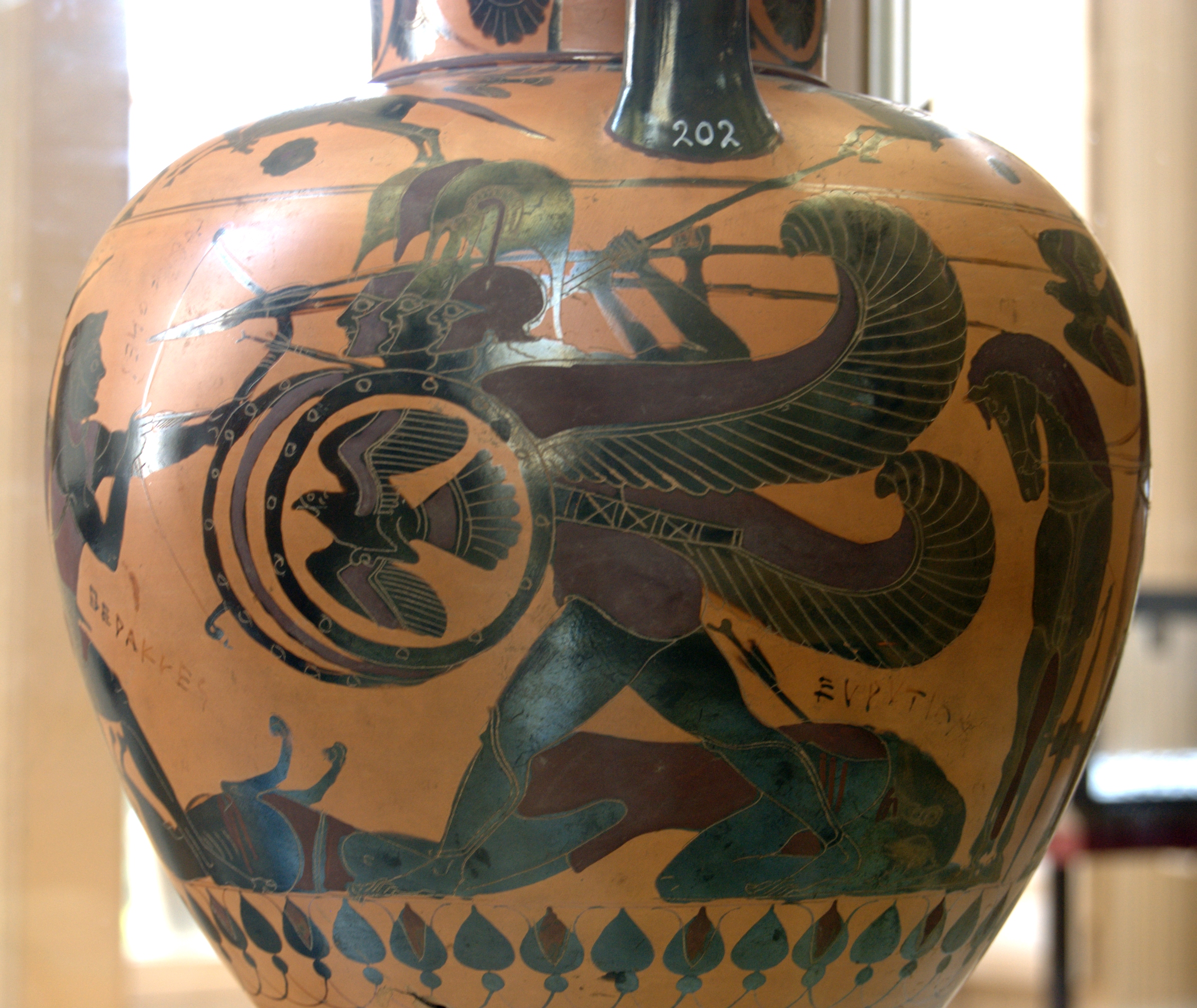
Another great figure from Greek mythology, Geryon is the three-bodied giant believed to live on the isle of Erytheia beyond the Hesperides to the west of the world's end (ancient Greek thought figured the edge of existence was whatever lay beyond the Mediterranean Sea). Reckoned to be a ferocious giant with brutal, warrior inclinations, the most outstanding thing about the figure is that he's seen as a 'three-in-one' beast. Geryon is described as being triple-bodied with three heads and torsos joined together which all ultimately adds up to something spectacularly terrifying. Depictions don't always agree on exact numbers of heads, legs and arms, however, and sometimes the giant is given wings. Despite all the ferocity, Geryon has a herd of magnificent red cattle that he cares for with the aid of Eurytion the human hersdman and Orthrus the two-headed watchdog (and brother of Cerberus). Heracles, despatched to claim the cattle, sails in a golden cup to the Hesperides and clubs the giant's companions to death before grappling with Geryon himself. The triple-titan meets his demise when the demigod knocks off one of his helmets and pierces the forehead with a hydra-venom-laced arrow. Legend then has it that Heracles brings the special bovine back to King Eurystheus having successfully completed task ten (after he gets sidetracked when Hera sends gadflies to bother the cattle and causes them to scatter across the continent. It takes the hero a year to gather them together again). It's a pretty sorry end for such a striking, imaginatively-inspiring beast. To the great giant cowherd of Greek mythology, I'd say a bit of empathy and awed respect for his outstanding anatomy is due.

Tuesday, March 2, 2010

Day XCII - Vampire


Cadaverous fiend,
Ubiquitous bloodsucker,
Unholy icon.


Probably the most popular of all mythical monsters in the present day, everyone knows of (and either loves or fears) vampires. Most often configured as 'living dead' beings that feed off the blood of humans, Vampirism is usually the result of improper burial or an unholy death which consequently links the creature to religious superstition, disease and decay. Vampires may be able to shapeshift, are often imagined as being fanged and cadaverous figures who keep to the dark; in the whole mass of divergent mythologies, protective methods include religious paraphernalia, garlic, holy water and mirrors. Every region and culture has their own vampire-type entity operating as a bloodsucking horror though the archetype has been mainly drawn from European traditions - particularly Slavic - with the rest fleshed out by literature (especially Bram Stoker's Dracula) and classic horror flicks. Ultimately, the Vampire is many different things to many different people and, thus, is probably the finest folklore figure in that it serves as an embodiment of all death and fear according to the individual's own psychological profile. Whatever the tradition and whatever your idealised Vampire is (mine is Murnau's Nosferatu) make sure you don't invite one in and ensure that you appreciate the awesome monsters well out of biting distance.

Monday, March 1, 2010

Day XCI - Nix


Long, wet lustrous hair,
Spirit of northern waters,
Sound of sweet music.


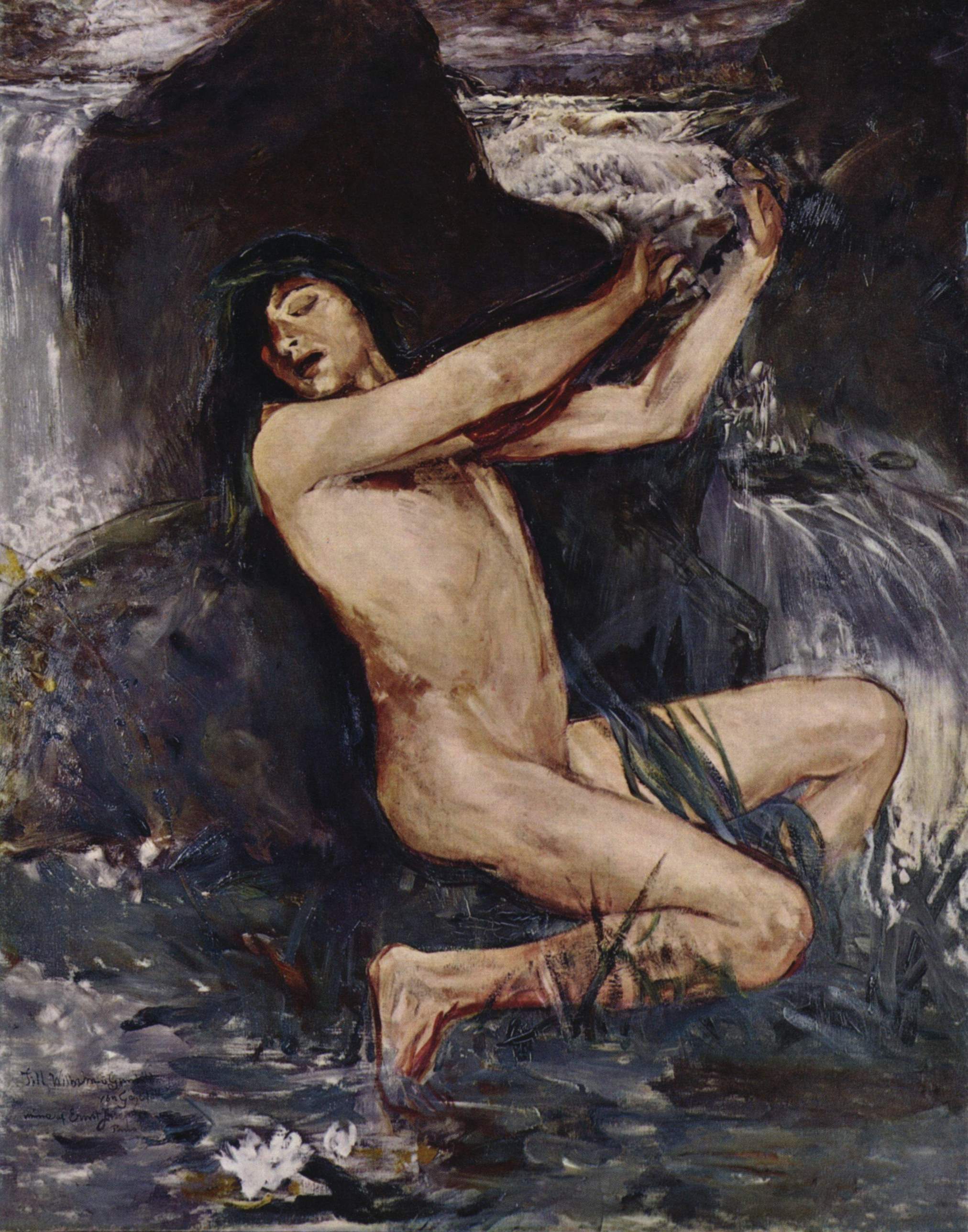
A wonderful water spirit, the Nix goes by many names and is present across a range of northern European folk traditions, generally understood to be a mermaid or merman-like entity. Believed to have shapeshifting ability, artworks most often depict the Nix in human form and identify it as an enchanting creature that lures people to the shore through the power of music. The violin is the water-sprite's instrument of choice and in some folk traditions it's terribly effective in mesmerising passers-by and leading them to a drowning death. Saying the creature's name aloud can protect against its malevolent influence, though that'd assume you knew whether it was called Nix, Nixie, neck, näck, nøkk, nøkken, Grim, Fosse-grim or Strömkarl. Whatever label it goes by, the supernatural figure of northern European legend has also been perceived as a beautiful, harmless entity at one with nature who may even pass on its artistic abilities to others if it feels generous. All give a round of applause to the Nix making sweet sounds and capturing imaginations across Scandinavian, British and German mythology.

Sunday, February 28, 2010

Day XC - Tengu


Bird-man with big beak,
Ascetic flying demon,
Spirit sticks nose in.


A symbolic creature of great significance in Japanese culture, the Tengu is a tremendously weird avian entity. Commonly considered to be an amalgamation of human and bird, the creature has been configured by Buddhist and Shinto traditions as both a disruptive evil demonic entities and good kami spirits respectively. Over the ages the Tengu's features have become increasingly anthropomorphised and in contrast to the ancient image of a dog-like crow, the creature is now most well-known for its huge nose. According to tradition, this immense snout is a powerful icon warning against arrogance and ill-use of knowledge and the Tengu takes out its wrath on samurai and monks whose behaviour does not become their vocation. Linked to martial arts, the Shugendō sect (hence the distinctive cap and robes in artwork), the ascetic avian's famous form can be found across folk tales and popular culture all over the place. Making mischief and greatly popular in public imagery, the Tengu deserves praise for its awe-inspiring potent protuberance. Have due respect for the vigilant spirit of Japan's skies: the disciplinarian mythic mountain spirit with the massive nose.

Saturday, February 27, 2010

Day LXXXIX - Manticore


Tail of shooting spikes,
Lethal lion-hybrid strikes,
Brass tones of terror.


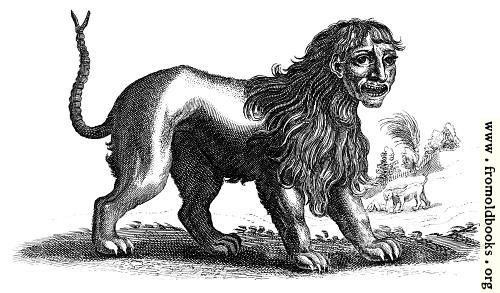
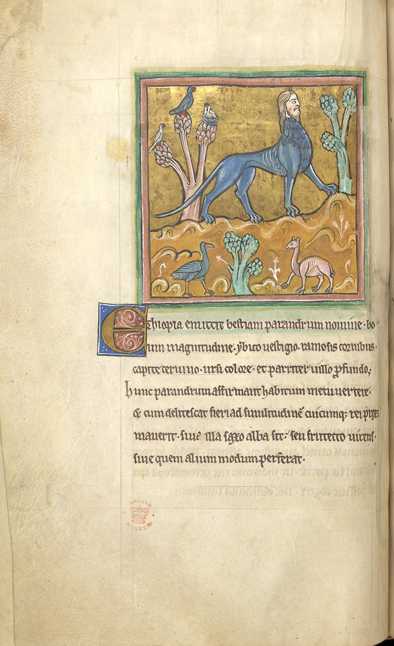
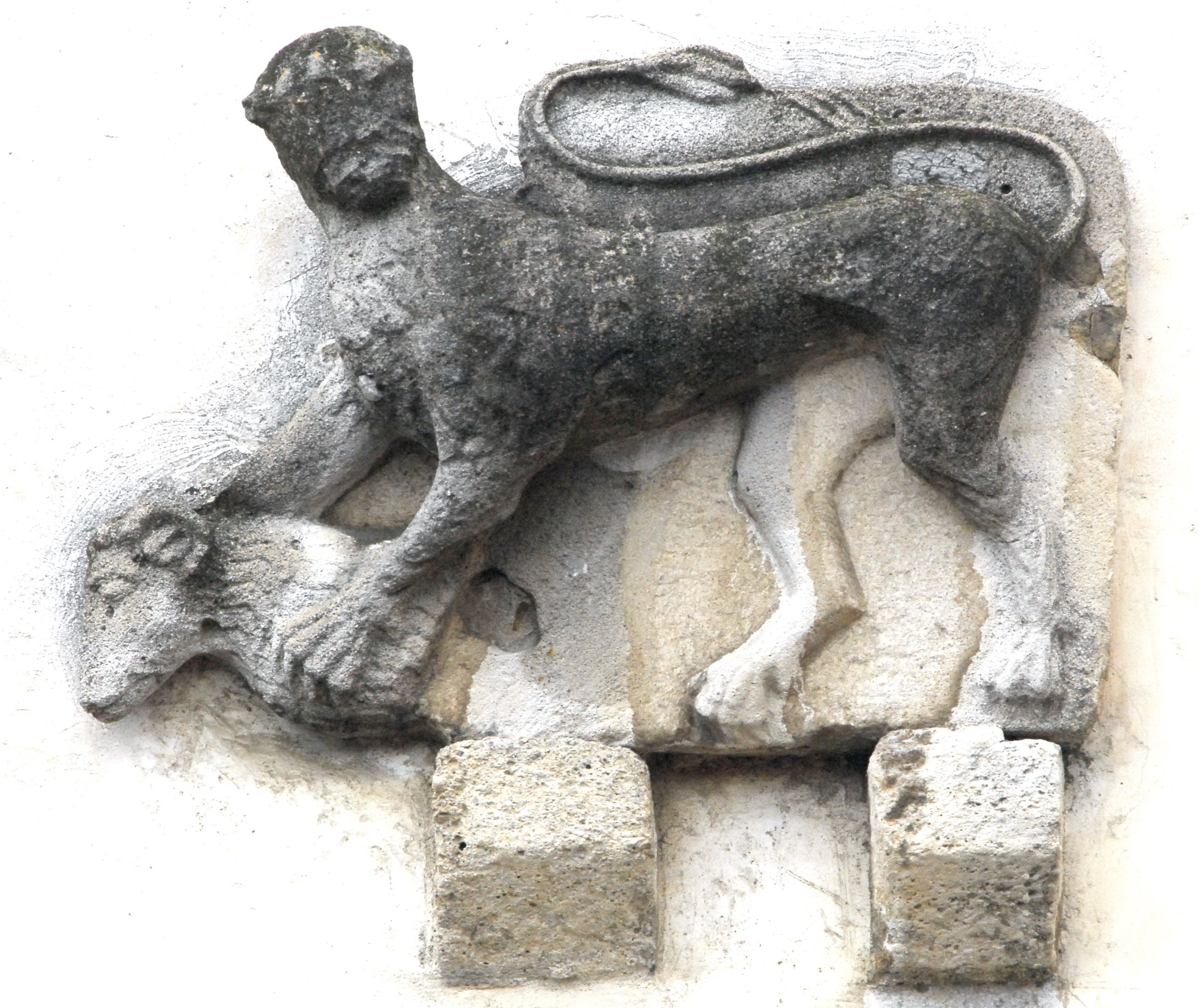
An incredible man-eating hybrid, the Manticore is a terrifying creature that has spread dread through a range of different mythical traditions. Like a masculine-version of the sphinx, the creature is commonly a composite of human head, a red lion body and a lethal tail of spiny poisonous spikes that it shoots to kill or paralyse its prey. The mythical beast - also understood to have a brilliant booming voice like a brass section - has its origins in ancient Persian legend and was believed to lurk in the far away lands of India. Tales of the Manticore spread to the leading intellectual arenas of Mediterranean antiquity and the creature consequently enjoyed a prominent resurgence in medieval European bestiaries. Despite its human traits and tuneful trumpet tones, the creature is a carnivorous horror desperate to rip flesh, sink its multiple rows of sharp teeth into meat and swallow victims whole. Flinging deadly arrows, the hybrid form of the Manticore is something to fear and, quite frankly, flee from without so much as a second thought.

Friday, February 26, 2010

Day LXXXVIII - Trauco


Stumpy seducer,
Small but sexually potent,
Women can't resist.


A curious little creature small in stature but sinister in nature, the Trauco is a South American dwarf said to dwell in the forests of Chile and the sleeping dreams of the region's younger women. The Chilota folklore figure is often depicted as a diminutive little fellow in a suit and hat of natural fibres with footless stump legs. The Trauco is often believed to carry a powerful stick or stone-headed hatchet which he bashes trees with to emphasise his sexual potency. Oddly enough, the mythical being's allure is overwhelming and he's irresistible to women who will subsequently be charmed by his magical magnetism. Such is the pull of the peculiar forest goblin that single women who fall pregnant with no clear father are excused as victims of the Trauco. The deadly gaze of the Chilean goblin is also alleged to be able to kill a man which makes the little fellow lethal regardless of gender. Beware the hatchet-bearing stumpy humanoid in the forests of South America: the Trauco brings trouble.

Thursday, February 25, 2010

Day LXXXVII - Lóng


Enter the dragon,
China's supreme scaly one,
Power and prestige.


The mighty reptilian form of the dragon reigns supreme over Far Eastern culture and the most influential tradition in the imagery and dispersed mythology is probably that of China. Commonly conceptualised as a wingless, great scaled serpentine creature with four legs, the Chinese dragon (or "Lóng" as it is known in the local tongue) is venerated as an icon with connotations of power, strength and good fortune. Historically, the Lóng is linked to the prestige of the Emperor (a dragon with 5-claws symbolises the Imperial ruler), the water element and Han Chinese cultural identity and such is its celestial and social significance that disfiguring a depiction of a dragon is taboo. This all makes a welcome change from Western folklore traditions of evil dragons that must be slayed; the prominence of the Lóng in art, folk tales and popular culture across Asia attests to a wide appreciation of what are awesome supernatural entities. As the most potent and alluring of all dragons, the great Lóng of China commands a colossal amount of respect and should be celebrated (rather than brutally slain).

Wednesday, February 24, 2010

Day LXXXVI - Domovoi


Hairy housekeeper,
Upset by untidiness,
Sulks beneath the stove.


A diligent domestic spirit from Slavic folklore, the Domovoi is revered as a superb household creature that is undoubtedly handy to have around. Eastern European legend has it that every house has one of the hairy little domesticated beings living under the stove or threshold protecting the family and maintaining a peaceful, orderly abode. In terms of appearance, Domoviye are commonly characterised as having grey beards, little horns and a tail and may even look like their owner who they'll dutifully serve and possibly even act as an oracle for. The furry housekeeper will do the chores and generally be a friendly family member as long as its owners show it affection, don't deliberately make a dirty mess and give it gifts (milk, biscuits or salted bread are popular presents). They'll also unleash their malicious streak on neighbouring households and harass the horses, cause disorder and break things if they're in a bad mood. It pays to appease and appreciate the hairy household spirit of Russian mythology so it doesn't start playing poltergeist tricks. Altogether, I'd say that the Domovoi is a sweet and charming supernatural entity, and no home should be without one.

Tuesday, February 23, 2010

Day LXXXV - Pamola


Wings of cold weather,
Natives fear the antlers,
Sacred mountain moose.


Identified as the protector and guardian spirit of Mount Katahdin in what is now the state of Maine, the Pamola is characterised as having the head of a moose, the body of a human and the talons and wings of an eagle. A spectacular bird creature from Native American tradition, tribes such as the Abenaki and Penobscot respect Pamola as a thunder god who brings cold weather and comes down hard on the humans it resents. Terrified of the antler-toting spirit, climbing the great mountain was considered taboo in native culture and to dissuade intruders the flying moose clouds obscures the peaks with lightning storms and clouds. Even though hikers appear to ignore the spirit, you'd be hard-pressed to consider a winged moose weather lord anything but compelling and worthy of kudos. The powerful Pamola of American folklore deserves praise and veneration indeed.

Monday, February 22, 2010

Day LXXXIV - Mami Wata


Beautiful spirit,
Much-worshipped water woman,
African mermaid.


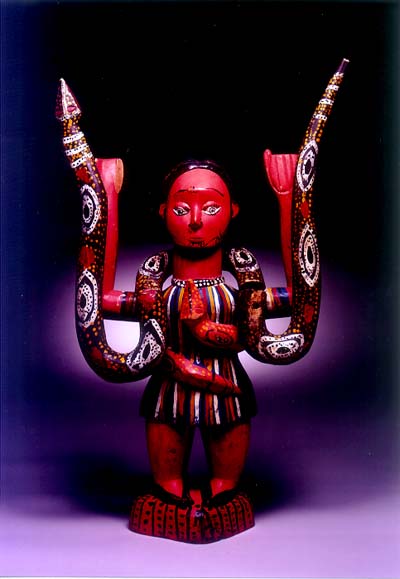
Venerated water spirits across a range of African diaspora cultures, Mami Wata is a feminine supreme mermaid figure revered around the globe. Sometimes a pantheon of deities and sometimes a sole entity with a different name depending on region and tradition, the overall understanding is that the creature is an auspicious being of great spiritual power associated with water, healing and love. Often represented as a beautiful, long-haired woman with the tail of a fish and naked human torso, Mami Wata's body is also adorned by a great serpent and jewels (she's also linked to wealth and good fortune). She's a captivating creature, whether she's understood along usual mermaid lines (dangerous seductive sexual creatures capturing young men in the spirit realm until they promise to be faithful and avoid eating fish) or as sacred nature deities of prosperity, voodoo ritual and priestess devotion. Drawing upon ancient maternal traditions and enchanting people across Africa, the Caribbean and the Americas, Mami Wata deserves our awe and appreciation. Much love to the great mermaid.

Sunday, February 21, 2010

Day LXXXIII - Simurgh


Extravagant wings,
Eminent shah of the sky,
Persian purity.


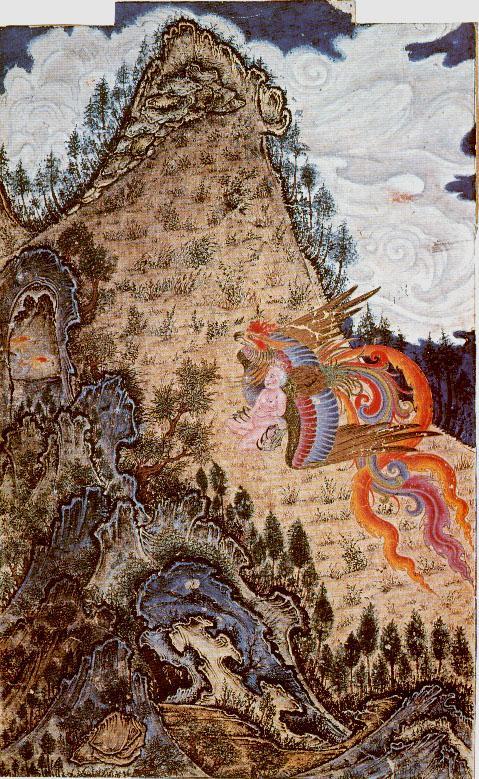
A marvellous flying hybrid of Persian mythology, the Simurgh is a griffin-like great bird said to have dog features (sometimes a human face) and lavish, extravagant feathers similar to a peacock. An icon across a range of Middle Eastern cultures - from ancient Iran through the medieval Byzantine empire and beyond - the fabulous wings of the Simurgh have adorned a wide array of artworks across the ages and is reckoned to live 1,700 years before burning up to be born again, phoenix-style. With immense wisdom as befits its old age, the creature is symbolic of purity, healing and fertility and is frequently figured as a helpful, benevolent bird in folk tales. Hailed as the almighty venerable ruler over all avian creatures and intercessor between earth and the heavens, the spectacular plumage of the Simurgh is a bonus that makes the being even more imaginatively-inspiring. Flying high on beautiful wings, here's to the majestic dog-bird of Persian legend.

Saturday, February 20, 2010

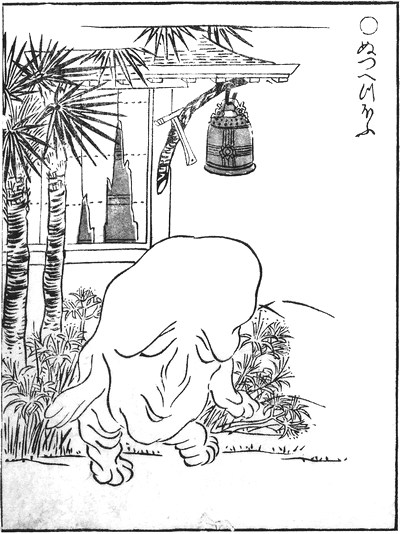
Day LXXXII - Nuppeppo


Odious yōkai,
Lumpy blob of flabby flesh,
Malodorous mass.


An extremely unusual and pretty unnerving yōkai from Japanese folklore, the Nuppeppo is a, basically, a supernatural blob of flesh. Most commonly characterised as being a genderless lump of flab no taller than a metre-and-a-half in height, a face and features such as fingers and toes may also be attributed as anatomical features amindst the folds of skin. Legend has it that the mythical "Blobby" is a passive, benign being who harmlessly wanders around deserted graveyards, temples and villages. What is truly offensive though is the smell of the Nuppeppo: said to be body odour worse than the stench of rotting flesh (some believe that the Nuppeppo is decaying flesh). Despite its odious nature, eternal youth allegedly awaits those who eat the skin of the lumpy spook and, altogether, it's hard not to find the 'the Blob' of Japanese legend just a little appealing. It's a moving mass of flesh! Brilliant!

Friday, February 19, 2010

Day LXXXI - Centaur


Savage hooves gallop,
Engaged in war with Lapiths,
Equestrian man.


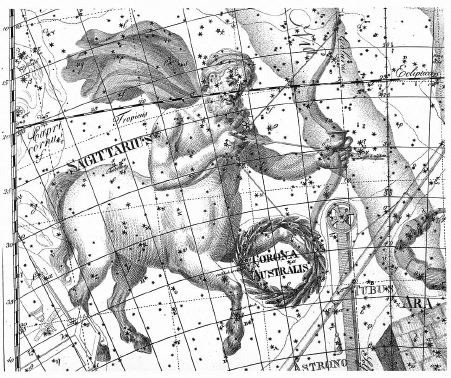
With the torso of a human being emerging out of the body of a horse, the Centaurs are supreme hybrid creatures of Greek mythology whose equestrian forms live long in cultural memory. Lusty, violent and easily influenced by wine, the creatures are generally characterised as a brutal and unruly race of beings with the exception of the wise Cheiron (master medicine expert and tutor to many a Greek hero who gave up immortality so he could become the Sagittarius constellation) and Pholus (friend of Heracles who accidentally kills himself with one of the legend's poison arrows). Out of the many myths in which the Centaurs make an appearance, the most significant episode is their clash with the Lapiths which comes when the horse-human hybrids violently gatecrash King Pirithous' wedding and attempt to abduct the female guests. With the help of Theseus, the Lapith people inflict huge losses on the Centaurs and scatter them across the lands in a battle which symbolises the triumph of civilisation over barbarism. Despite the defeat and condemnation as 'uncivilised', the presence of Centaurs in art across the ages - beyond their Greek origins - attests to the fact that these are awesome mythical entities that deserve our respect and appreciation. The half-man-half-horse is magnificent.

Thursday, February 18, 2010

Day LXXX - Yeti


Legendary snowman,
Mystery of the mountains,
Great Himalayan.


The infamous Abominable Snowman of Asia, the mighty Yeti is reckoned to be a giant ape-man lurking in the Himalayas. Well-known the globe over thanks to its popularity in pop-culture and numerous sightings and cryptozoological expeditions, the Yeti is also known as Mi-Go and Meh-Teh in Tibetan and Ban-manche in Nepalese (amongst many other names). Various accounts (and after reading and weeping through Tintin in Tibet, no one is telling me that the Yeti isn't out there) have the creature as a woolly great primate or bear-type being with thick white or dark fur. The mysterious, gargantuan thing in the world's highest mountains continues to captivate imaginations and its awesomeness can't be denied. All hail the Yeti!

Wednesday, February 17, 2010

Day LXXIX - Abatwa


Zulu warrior,
Nomad mounted on an ant,
Careful where you step.


An incredible element of Zulu mythology, Abatwa are pretty much shy tiny humans said to be so small they can hide in anthills or behind blades of grass. South African legend has it that the little beings are hunter nomads that ride ants to get about or indeed get away from being seen. So sensitive is the Abatwa about its diminutive height that it can only tolerate being spotted by magicians, pregnant women or children under the age of four. If you spy one and you don't meet those criteria then you'll have to convince the Abatwa that you saw it from a long way away in order to as not to offend it (and consequently feel the points of poison arrows). Stepping on the creatures is also a death sentence so altogether it makes sense to be aware of the awesome pygmy people of South Africa. All hail the Abatwa as they ride astride their ant-mounts!

Tuesday, February 16, 2010

Day LXXVIII - Nure-onna


Beautiful serpent,
Seeking shoreside solitude,
Woman washes hair.


Believed to have the head of an attractive human woman and the lengthy body of a snake, the Nure-onna is an amphibious supernatural entity from Japanese legend. Characterised as being up to an incredible 300 metres long with fangs and fingers in some tales, the most outstanding features of the serpent lady are her lizard tongue and her hair. For the Nure-onna, it's all about her shiny luscious locks and the creature allegedly spends its time looking for peaceful places on the shore where she can wash her hair without any interruption. Those who do disturb her may find themselves having their blood sucked by the reptilian tongue, sometimes having been prevented from escaping if they accepted a  baby-like bundle from the great snake (the bundle gets heavier as soon as the victim takes it in their arms). Either way, you're best off leaving the Nure-onna alone in peace and quiet to get on with their haircare. Kudos to what is possibly the most private and perfectionist of all Japan's paranormal beings.

Monday, February 15, 2010

Day LXXVII - Kobold


German household sprite,
Small domestic folk figure,
Dressed in peasant garb.


A legendary little race of beings with many local variations and divergent traditions, Kobolds are German fun folklore beings whose mythical roots date back to the Middle Ages. Usually configured as monstrous dog-troll terrors in Dungeons & Dragons realms, the traditional Kobold of legend is said to be a humanoid figures no taller than a few feet high. What they look like depends on where they dwell: there are hunched-up mine Kobolds, sailor-suit-wearing and pipe-smoking ship Kobolds and - most prominent - household Kobolds. The domesticated little spirits are understood to do chores or make mischief depending on how they're treated and characteristically wear peasant clothing. Popular fairyfolk that they are, stories of Kobolds include the Heinzelmännchen of Köln (they used to do all the work in the town) and the Hödekin of Hildeheim (felt-hat wearing friend of the local bishop). In a way it's a shame their reputation has been uglified by role-playing in recent years, and the Mainzelmännchen who appear in the ZDF TV channel idents are much closer in spirit to the old-fashioned folklore figuration of the imagination-capturing Kobold. The tiny people of German legend deserve our tribute and praise.

Sunday, February 14, 2010

Day LXXVI - Nian


Firecrackers flash,
Dancing for Chinese New Year,
Beast flees from the noise.


A popular figure from Chinese folklore, legend has it that the Nian comes from under the sea or mountains to attack the villages and prey on people. Humans need not fear though, for the creature - given different characteristics depending on region and local tradition - is an easily-scared entity that will never return to bother the area again once it's been frightened. Allegedly afraid of the colour red and loud noises, the Nian can be driven away by cacophonous celebrations, firework displays and dance processions: all of which take place on Chinese New Year. Thus, New Year celebrations the world over feature a lion dance around a symbolic representation of the Nian to scare the monster away and mark 'the passing of the beast'. Even though it only takes some rhythmic kung-fu acrobatics, a few red banners and the banging of drums to send it scarpering, for its role in Chinese New Year tradition the fantastical Nian deserves tribute. Kung Hei Fat Choi!